
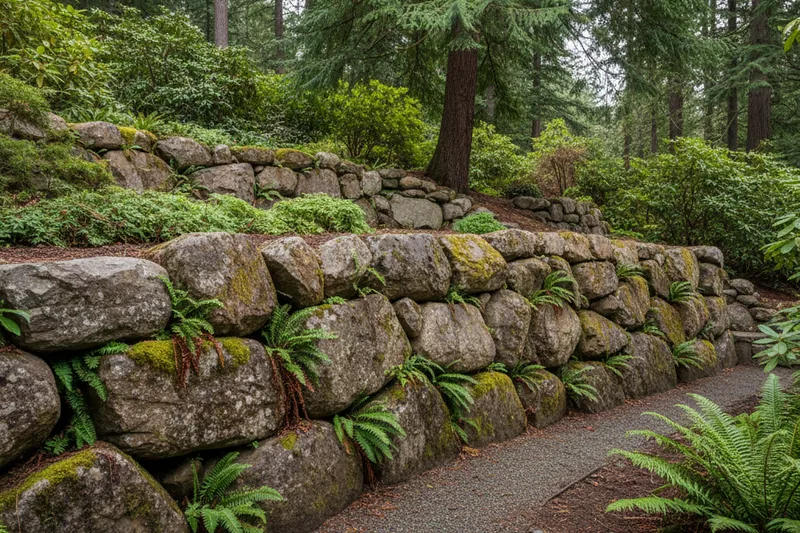
Do I Need a Permit for My Retaining Wall in Washington State?

Do I Need a Permit for My Retaining Wall in Washington State?

Request a Quote

Do I Need a Permit for My Retaining Wall in Washington State?

For many Washington homeowners, a retaining wall is a necessity rather than a luxury. Whether you are managing a steep slope in Seattle, preventing erosion in King County, or simply trying to flatten a backyard for a patio, dealing with the earth is a major construction project.

However, before you dig the first trench or order a single pallet of blocks, you must answer one critical question: Is this legal?

The most common question our team receives is, “Do I really need a permit for a garden wall?” The answer is rarely a simple “no.” While many small walls are exempt, Washington State’s strict seismic and environmental codes mean that even short walls can trigger a permit requirement under specific conditions.

This guide breaks down the International Building Code (IBC) as it applies to Washington, the “4-foot rule,” and the hidden exceptions that catch homeowners off guard.

The Short Answer: The “4-Foot Rule”

In most Washington municipalities, including Seattle, Bellevue, and Unincorporated King County, the general threshold for a permit is 4 feet.

You typically DO NOT need a permit if:

  • The retaining wall is less than 4 feet high, measured from the bottom of the footing to the top of the wall.

  • The wall is not supporting a “surcharge” (heavy load) like a driveway, house foundation, or another wall above it.

  • The wall is not located in a “Critical Area” (steep slope, wetland, or shoreline).

You typically DO need a permit if:

  • The wall is 4 feet or taller (measured from the bottom of the buried footing, not just the visible height).

  • The wall supports a surcharge (a slope, parking pad, or structure behind it).

  • The wall is near a property line.

  • You are building in an Environmentally Critical Area (ECA).

Critical Distinction: The height is measured from the bottom of the footing, not ground level. If you want a 3-foot visible wall, but you need to bury 1 foot of block for stability, your total structural height is 4 feet. This puts you right on the line of requiring a permit.

Understanding “Surcharge”: The Exception to the Rule

The most common mistake homeowners make is assuming that because their wall is short, it is safe from regulation. This is false. A 2-foot wall holding back a driveway is under significantly more stress than a 6-foot wall holding back a flower bed.

This stress is called Surcharge.

If your proposed wall will be holding back anything other than a flat, level lawn, you likely need a permit regardless of height. Common surcharges include:

  • Driveways and Parking Pads: The weight of vehicles exerts massive lateral pressure on the soil behind the wall.

  • Slopes: If the ground behind the wall continues to slope upward (a “sloping backfill”), the weight of that extra dirt pushes against the wall.

  • Structures: Footings for decks, sheds, or your home’s foundation add weight to the soil wedge behind the wall.

  • Tiered Walls: If you plan to build two short walls instead of one tall one (terracing), the upper wall often exerts pressure on the lower wall.

If any of these factors exist, a structural engineer must review the design to ensure the wall won’t blow out during Washington’s rainy season.

Why Do Permits Even Exist?

It can feel like a bureaucracy grab, but in Washington, retaining wall permits exist primarily for two reasons: Public Safety and Water Management.

1. Landslide Prevention

Washington soil is often glacial till or clay, which becomes heavy and unstable when saturated with rain. A failed wall doesn’t just topple over; it can trigger a landslide that threatens your home or your neighbor’s property.

2. Drainage Control

Retaining walls act as dams. Without proper drainage, hydrostatic pressure (water weight) builds up behind the wall. Permits ensure that your contractor installs proper drainage fabrics, gravel backfill, and drain pipes. If this is skipped, you will eventually see retaining wall cracks or bulging, signaling a catastrophic failure.

3. Liability Protection

If unpermitted work fails and damages a neighbor’s property, your homeowner’s insurance may deny the claim because the work was illegal. A permit is your proof that the structure met safety standards.

The Permitting Process: What to Expect

If your project requires a permit, do not panic. It adds time, but it ensures you get a wall that lasts 50+ years. Here is the typical workflow.

Step 1: Site Plan and Survey

You need a drawing of your property showing property lines, existing structures, and where the new wall will go.

Step 2: Geotechnical Engineering

For large walls or difficult soils, a Geotechnical Engineer may need to drill a test hole to analyze the soil friction and load-bearing capacity. They tell the structural engineer what kind of dirt they are working with.

Step 3: Structural Engineering

A structural engineer designs the wall. They will specify:

  • Footing size: How deep and wide the base must be.

  • Reinforcement: The use of rebar (for concrete) or Geogrid (for block walls).

  • Drainage: Specific outlets for water.

Step 4: Submission and Review

Your contractor or designer submits these plans to your local building department (e.g., SDCI in Seattle).

  • Simple Permits: 2–4 weeks.

  • Complex Permits (ECA): 8–12 weeks.

Step 5: Inspections

The city will likely require inspections at two specific times:

  1. After the trench is dug but before pouring concrete/gravel: To verify the soil is firm and the footing is deep enough.

  2. Final Inspection: To ensure the wall matches the plans and drainage is installed.

Costs: How Much Does a Permit Add?

Budgeting for a permitted wall is different than a simple garden project. You aren’t just paying for blocks and labor; you are paying for compliance.

  • Permit Fees: Local jurisdictions typically charge a fee based on the value of the project. In King County, this can range from $200 to $1,000+.

  • Engineering Fees: A structural engineer typically charges $1,500 to $3,000 for standard retaining wall calculations and drawings.

  • Geotechnical Fees: If a soils report is required, expect to add $2,000 to $4,000.

While this sounds expensive, it is significantly cheaper than rebuilding a failed wall. For a detailed breakdown of total project costs, including materials and labor, review our guide on retaining wall costs in Seattle.

Material Choices and Permitting

Does the material matter for the permit? Generally, no. The structural forces are the same whether you use concrete blocks, poured concrete, or boulders.

However, the engineering changes based on material.

  • Segmental Block Walls: Rely on geogrid mesh buried in the soil.

  • Boulders/Rock Walls: Rely on the sheer weight and size of the rocks. (Moving these requires specialized heavy equipment. See: how to move large rocks and boulders).

  • Timber/Railroad Ties: These are difficult to engineer for heights over 4 feet because wood degrades. Many engineers are hesitant to stamp plans for tall timber walls.

Risks of Skipping the Permit

We see it often: a homeowner hires a “handyman” who promises to build a 6-foot wall over the weekend for cash, no questions asked. Here is why that is a dangerous gamble:

  1. The “Red Tag”: If a neighbor complains or a city inspector drives by, they will issue a Stop Work Order. You will pay double the permit fees and may be forced to demolish the work done so far.

  2. Property Devaluation: When you sell your home, you must disclose unpermitted work (Form 17 in WA). Savvy buyers will demand you retroactively permit the wall (which often requires digging it up) or drop the price significantly.

     
  3. Insurance Loopholes: If a slide occurs, your insurance company’s first step is to check if the structure was legal.

Frequently Asked Questions

Does replacing an existing retaining wall require a permit?

Yes. If the old wall was 5 feet tall, the new wall is also 5 feet tall and requires a permit. In fact, replacing a failed wall often invites more scrutiny from the city because they want to know why the first one failed.

Can I build a 3-foot wall on top of a 3-foot wall to avoid a permit?

No. This is called “terracing.” If the walls are too close together (usually within a distance equal to twice the height of the lower wall), the city treats them as one single 6-foot structure.

What is an “ECA” in Seattle?

ECA stands for Environmentally Critical Area. This includes steep slopes (40%+ grade), potential slide areas, wetlands, and riparian corridors. In these zones, you need a permit for any land disturbance, even for walls shorter than 4 feet.

Do I need a permit for a rockery?

Technically, a “rockery” is considered a protective facing for a cut slope, not always a structural wall. However, most jurisdictions in Washington treat rockeries over 4 feet exactly like retaining walls.

When to Call a Professional

Navigating the permit office in Seattle, Lynnwood, or Bellevue can be as difficult as building the wall itself. If your project is over 4 feet, near a property line, or supports a driveway, it is not a DIY project.

You need a partner who understands the local soil conditions and the legal requirements. Hiring professional retaining wall contractors ensures that the engineering is sound, the drainage is correct, and the paperwork is handled for you.

INTERNAL LINKING RECOMMENDATIONS

Anchor Text: retaining wall contractors Suggested Page Topic: Retaining Wall Service Page Where to Place: In the Conclusion (Final Paragraph) and/or Introduction.

Anchor Text: retaining wall costs in Seattle Suggested Page Topic: Cost Guide Where to Place: In the “Costs: How Much Does a Permit Add?” section.

Anchor Text: retaining wall cracks Suggested Page Topic: Repair/Failure Blog Where to Place: In the “Why Do Permits Even Exist?” section under “Drainage Control.”

Anchor Text: how to move large rocks and boulders Suggested Page Topic: Rock Moving Guide Where to Place: In the “Material Choices and Permitting” section.

Anchor Text: Lynnwood retaining walls Suggested Page Topic: Location Service Page Where to Place: In the “When to Call a Professional” section (mentioning specific service areas).

Anchor Text: railroad tie retaining wall Suggested Page Topic: Material Specific Blog Where to Place: In the “Material Choices and Permitting” section (referencing timber walls).

For many Washington homeowners, a retaining wall is a necessity rather than a luxury. Whether you are managing a steep slope in Seattle, preventing erosion in King County, or simply trying to flatten a backyard for a patio, dealing with the earth is a major construction project.

However, before you dig the first trench or order a single pallet of blocks, you must answer one critical question: Is this legal?

The most common question our team receives is, “Do I really need a permit for a garden wall?” The answer is rarely a simple “no.” While many small walls are exempt, Washington State’s strict seismic and environmental codes mean that even short walls can trigger a permit requirement under specific conditions.

This guide breaks down the International Building Code (IBC) as it applies to Washington, the “4-foot rule,” and the hidden exceptions that catch homeowners off guard.

The Short Answer: The “4-Foot Rule”

In most Washington municipalities, including Seattle, Bellevue, and Unincorporated King County, the general threshold for a permit is 4 feet.

You typically DO NOT need a permit if:

  • The retaining wall is less than 4 feet high, measured from the bottom of the footing to the top of the wall.

  • The wall is not supporting a “surcharge” (heavy load) like a driveway, house foundation, or another wall above it.

  • The wall is not located in a “Critical Area” (steep slope, wetland, or shoreline).

You typically DO need a permit if:

  • The wall is 4 feet or taller (measured from the bottom of the buried footing, not just the visible height).

  • The wall supports a surcharge (a slope, parking pad, or structure behind it).

  • The wall is near a property line.

  • You are building in an Environmentally Critical Area (ECA).

Critical Distinction: The height is measured from the bottom of the footing, not ground level. If you want a 3-foot visible wall, but you need to bury 1 foot of block for stability, your total structural height is 4 feet. This puts you right on the line of requiring a permit.

Understanding “Surcharge”: The Exception to the Rule

The most common mistake homeowners make is assuming that because their wall is short, it is safe from regulation. This is false. A 2-foot wall holding back a driveway is under significantly more stress than a 6-foot wall holding back a flower bed.

This stress is called Surcharge.

If your proposed wall will be holding back anything other than a flat, level lawn, you likely need a permit regardless of height. Common surcharges include:

  • Driveways and Parking Pads: The weight of vehicles exerts massive lateral pressure on the soil behind the wall.

  • Slopes: If the ground behind the wall continues to slope upward (a “sloping backfill”), the weight of that extra dirt pushes against the wall.

  • Structures: Footings for decks, sheds, or your home’s foundation add weight to the soil wedge behind the wall.

  • Tiered Walls: If you plan to build two short walls instead of one tall one (terracing), the upper wall often exerts pressure on the lower wall.

If any of these factors exist, a structural engineer must review the design to ensure the wall won’t blow out during Washington’s rainy season.

Why Do Permits Even Exist?

It can feel like a bureaucracy grab, but in Washington, retaining wall permits exist primarily for two reasons: Public Safety and Water Management.

1. Landslide Prevention

Washington soil is often glacial till or clay, which becomes heavy and unstable when saturated with rain. A failed wall doesn’t just topple over; it can trigger a landslide that threatens your home or your neighbor’s property.

2. Drainage Control

Retaining walls act as dams. Without proper drainage, hydrostatic pressure (water weight) builds up behind the wall. Permits ensure that your contractor installs proper drainage fabrics, gravel backfill, and drain pipes. If this is skipped, you will eventually see retaining wall cracks or bulging, signaling a catastrophic failure.

3. Liability Protection

If unpermitted work fails and damages a neighbor’s property, your homeowner’s insurance may deny the claim because the work was illegal. A permit is your proof that the structure met safety standards.

The Permitting Process: What to Expect

If your project requires a permit, do not panic. It adds time, but it ensures you get a wall that lasts 50+ years. Here is the typical workflow.

Step 1: Site Plan and Survey

You need a drawing of your property showing property lines, existing structures, and where the new wall will go.

Step 2: Geotechnical Engineering

For large walls or difficult soils, a Geotechnical Engineer may need to drill a test hole to analyze the soil friction and load-bearing capacity. They tell the structural engineer what kind of dirt they are working with.

Step 3: Structural Engineering

A structural engineer designs the wall. They will specify:

  • Footing size: How deep and wide the base must be.

  • Reinforcement: The use of rebar (for concrete) or Geogrid (for block walls).

  • Drainage: Specific outlets for water.

Step 4: Submission and Review

Your contractor or designer submits these plans to your local building department (e.g., SDCI in Seattle).

  • Simple Permits: 2–4 weeks.

  • Complex Permits (ECA): 8–12 weeks.

Step 5: Inspections

The city will likely require inspections at two specific times:

  1. After the trench is dug but before pouring concrete/gravel: To verify the soil is firm and the footing is deep enough.

  2. Final Inspection: To ensure the wall matches the plans and drainage is installed.

Costs: How Much Does a Permit Add?

Budgeting for a permitted wall is different than a simple garden project. You aren’t just paying for blocks and labor; you are paying for compliance.

  • Permit Fees: Local jurisdictions typically charge a fee based on the value of the project. In King County, this can range from $200 to $1,000+.

  • Engineering Fees: A structural engineer typically charges $1,500 to $3,000 for standard retaining wall calculations and drawings.

  • Geotechnical Fees: If a soils report is required, expect to add $2,000 to $4,000.

While this sounds expensive, it is significantly cheaper than rebuilding a failed wall. For a detailed breakdown of total project costs, including materials and labor, review our guide on retaining wall costs in Seattle.

Material Choices and Permitting

Does the material matter for the permit? Generally, no. The structural forces are the same whether you use concrete blocks, poured concrete, or boulders.

However, the engineering changes based on material.

  • Segmental Block Walls: Rely on geogrid mesh buried in the soil.

  • Boulders/Rock Walls: Rely on the sheer weight and size of the rocks. (Moving these requires specialized heavy equipment. See: how to move large rocks and boulders).

  • Timber/Railroad Ties: These are difficult to engineer for heights over 4 feet because wood degrades. Many engineers are hesitant to stamp plans for tall timber walls.

Risks of Skipping the Permit

We see it often: a homeowner hires a “handyman” who promises to build a 6-foot wall over the weekend for cash, no questions asked. Here is why that is a dangerous gamble:

  1. The “Red Tag”: If a neighbor complains or a city inspector drives by, they will issue a Stop Work Order. You will pay double the permit fees and may be forced to demolish the work done so far.

  2. Property Devaluation: When you sell your home, you must disclose unpermitted work (Form 17 in WA). Savvy buyers will demand you retroactively permit the wall (which often requires digging it up) or drop the price significantly.

     
  3. Insurance Loopholes: If a slide occurs, your insurance company’s first step is to check if the structure was legal.

Frequently Asked Questions

Does replacing an existing retaining wall require a permit?

Yes. If the old wall was 5 feet tall, the new wall is also 5 feet tall and requires a permit. In fact, replacing a failed wall often invites more scrutiny from the city because they want to know why the first one failed.

Can I build a 3-foot wall on top of a 3-foot wall to avoid a permit?

No. This is called “terracing.” If the walls are too close together (usually within a distance equal to twice the height of the lower wall), the city treats them as one single 6-foot structure.

What is an “ECA” in Seattle?

ECA stands for Environmentally Critical Area. This includes steep slopes (40%+ grade), potential slide areas, wetlands, and riparian corridors. In these zones, you need a permit for any land disturbance, even for walls shorter than 4 feet.

Do I need a permit for a rockery?

Technically, a “rockery” is considered a protective facing for a cut slope, not always a structural wall. However, most jurisdictions in Washington treat rockeries over 4 feet exactly like retaining walls.

When to Call a Professional

Navigating the permit office in Seattle, Lynnwood, or Bellevue can be as difficult as building the wall itself. If your project is over 4 feet, near a property line, or supports a driveway, it is not a DIY project.

You need a partner who understands the local soil conditions and the legal requirements. Hiring professional retaining wall contractors ensures that the engineering is sound, the drainage is correct, and the paperwork is handled for you.


INTERNAL LINKING RECOMMENDATIONS

Anchor Text: retaining wall contractors Suggested Page Topic: Retaining Wall Service Page Where to Place: In the Conclusion (Final Paragraph) and/or Introduction.

Anchor Text: retaining wall costs in Seattle Suggested Page Topic: Cost Guide Where to Place: In the “Costs: How Much Does a Permit Add?” section.

Anchor Text: retaining wall cracks Suggested Page Topic: Repair/Failure Blog Where to Place: In the “Why Do Permits Even Exist?” section under “Drainage Control.”

Anchor Text: how to move large rocks and boulders Suggested Page Topic: Rock Moving Guide Where to Place: In the “Material Choices and Permitting” section.

Anchor Text: Lynnwood retaining walls Suggested Page Topic: Location Service Page Where to Place: In the “When to Call a Professional” section (mentioning specific service areas).

Anchor Text: railroad tie retaining wall Suggested Page Topic: Material Specific Blog Where to Place: In the “Material Choices and Permitting” section (referencing timber walls).

Request a Quote

For many Washington homeowners, a retaining wall is a necessity rather than a luxury. Whether you are managing a steep slope in Seattle, preventing erosion in King County, or simply trying to flatten a backyard for a patio, dealing with the earth is a major construction project.

However, before you dig the first trench or order a single pallet of blocks, you must answer one critical question: Is this legal?

The most common question our team receives is, “Do I really need a permit for a garden wall?” The answer is rarely a simple “no.” While many small walls are exempt, Washington State’s strict seismic and environmental codes mean that even short walls can trigger a permit requirement under specific conditions.

This guide breaks down the International Building Code (IBC) as it applies to Washington, the “4-foot rule,” and the hidden exceptions that catch homeowners off guard.

The Short Answer: The “4-Foot Rule”

In most Washington municipalities, including Seattle, Bellevue, and Unincorporated King County, the general threshold for a permit is 4 feet.

You typically DO NOT need a permit if:

  • The retaining wall is less than 4 feet high, measured from the bottom of the footing to the top of the wall.

  • The wall is not supporting a “surcharge” (heavy load) like a driveway, house foundation, or another wall above it.

  • The wall is not located in a “Critical Area” (steep slope, wetland, or shoreline).

You typically DO need a permit if:

  • The wall is 4 feet or taller (measured from the bottom of the buried footing, not just the visible height).

  • The wall supports a surcharge (a slope, parking pad, or structure behind it).

  • The wall is near a property line.

  • You are building in an Environmentally Critical Area (ECA).

Critical Distinction: The height is measured from the bottom of the footing, not ground level. If you want a 3-foot visible wall, but you need to bury 1 foot of block for stability, your total structural height is 4 feet. This puts you right on the line of requiring a permit.

Understanding “Surcharge”: The Exception to the Rule

The most common mistake homeowners make is assuming that because their wall is short, it is safe from regulation. This is false. A 2-foot wall holding back a driveway is under significantly more stress than a 6-foot wall holding back a flower bed.

This stress is called Surcharge.

If your proposed wall will be holding back anything other than a flat, level lawn, you likely need a permit regardless of height. Common surcharges include:

  • Driveways and Parking Pads: The weight of vehicles exerts massive lateral pressure on the soil behind the wall.

  • Slopes: If the ground behind the wall continues to slope upward (a “sloping backfill”), the weight of that extra dirt pushes against the wall.

  • Structures: Footings for decks, sheds, or your home’s foundation add weight to the soil wedge behind the wall.

  • Tiered Walls: If you plan to build two short walls instead of one tall one (terracing), the upper wall often exerts pressure on the lower wall.

If any of these factors exist, a structural engineer must review the design to ensure the wall won’t blow out during Washington’s rainy season.

Why Do Permits Even Exist?

It can feel like a bureaucracy grab, but in Washington, retaining wall permits exist primarily for two reasons: Public Safety and Water Management.

1. Landslide Prevention

Washington soil is often glacial till or clay, which becomes heavy and unstable when saturated with rain. A failed wall doesn’t just topple over; it can trigger a landslide that threatens your home or your neighbor’s property.

2. Drainage Control

Retaining walls act as dams. Without proper drainage, hydrostatic pressure (water weight) builds up behind the wall. Permits ensure that your contractor installs proper drainage fabrics, gravel backfill, and drain pipes. If this is skipped, you will eventually see retaining wall cracks or bulging, signaling a catastrophic failure.

3. Liability Protection

If unpermitted work fails and damages a neighbor’s property, your homeowner’s insurance may deny the claim because the work was illegal. A permit is your proof that the structure met safety standards.

The Permitting Process: What to Expect

If your project requires a permit, do not panic. It adds time, but it ensures you get a wall that lasts 50+ years. Here is the typical workflow.

Step 1: Site Plan and Survey

You need a drawing of your property showing property lines, existing structures, and where the new wall will go.

Step 2: Geotechnical Engineering

For large walls or difficult soils, a Geotechnical Engineer may need to drill a test hole to analyze the soil friction and load-bearing capacity. They tell the structural engineer what kind of dirt they are working with.

Step 3: Structural Engineering

A structural engineer designs the wall. They will specify:

  • Footing size: How deep and wide the base must be.

  • Reinforcement: The use of rebar (for concrete) or Geogrid (for block walls).

  • Drainage: Specific outlets for water.

Step 4: Submission and Review

Your contractor or designer submits these plans to your local building department (e.g., SDCI in Seattle).

  • Simple Permits: 2–4 weeks.

  • Complex Permits (ECA): 8–12 weeks.

Step 5: Inspections

The city will likely require inspections at two specific times:

  1. After the trench is dug but before pouring concrete/gravel: To verify the soil is firm and the footing is deep enough.

  2. Final Inspection: To ensure the wall matches the plans and drainage is installed.

Costs: How Much Does a Permit Add?

Budgeting for a permitted wall is different than a simple garden project. You aren’t just paying for blocks and labor; you are paying for compliance.

  • Permit Fees: Local jurisdictions typically charge a fee based on the value of the project. In King County, this can range from $200 to $1,000+.

  • Engineering Fees: A structural engineer typically charges $1,500 to $3,000 for standard retaining wall calculations and drawings.

  • Geotechnical Fees: If a soils report is required, expect to add $2,000 to $4,000.

While this sounds expensive, it is significantly cheaper than rebuilding a failed wall. For a detailed breakdown of total project costs, including materials and labor, review our guide on retaining wall costs in Seattle.

Material Choices and Permitting

Does the material matter for the permit? Generally, no. The structural forces are the same whether you use concrete blocks, poured concrete, or boulders.

However, the engineering changes based on material.

  • Segmental Block Walls: Rely on geogrid mesh buried in the soil.

  • Boulders/Rock Walls: Rely on the sheer weight and size of the rocks. (Moving these requires specialized heavy equipment. See: how to move large rocks and boulders).

  • Timber/Railroad Ties: These are difficult to engineer for heights over 4 feet because wood degrades. Many engineers are hesitant to stamp plans for tall timber walls.

Risks of Skipping the Permit

We see it often: a homeowner hires a “handyman” who promises to build a 6-foot wall over the weekend for cash, no questions asked. Here is why that is a dangerous gamble:

  1. The “Red Tag”: If a neighbor complains or a city inspector drives by, they will issue a Stop Work Order. You will pay double the permit fees and may be forced to demolish the work done so far.

  2. Property Devaluation: When you sell your home, you must disclose unpermitted work (Form 17 in WA). Savvy buyers will demand you retroactively permit the wall (which often requires digging it up) or drop the price significantly.

     
  3. Insurance Loopholes: If a slide occurs, your insurance company’s first step is to check if the structure was legal.

Frequently Asked Questions

Does replacing an existing retaining wall require a permit?

Yes. If the old wall was 5 feet tall, the new wall is also 5 feet tall and requires a permit. In fact, replacing a failed wall often invites more scrutiny from the city because they want to know why the first one failed.

Can I build a 3-foot wall on top of a 3-foot wall to avoid a permit?

No. This is called “terracing.” If the walls are too close together (usually within a distance equal to twice the height of the lower wall), the city treats them as one single 6-foot structure.

What is an “ECA” in Seattle?

ECA stands for Environmentally Critical Area. This includes steep slopes (40%+ grade), potential slide areas, wetlands, and riparian corridors. In these zones, you need a permit for any land disturbance, even for walls shorter than 4 feet.

Do I need a permit for a rockery?

Technically, a “rockery” is considered a protective facing for a cut slope, not always a structural wall. However, most jurisdictions in Washington treat rockeries over 4 feet exactly like retaining walls.

When to Call a Professional

Navigating the permit office in Seattle, Lynnwood, or Bellevue can be as difficult as building the wall itself. If your project is over 4 feet, near a property line, or supports a driveway, it is not a DIY project.

You need a partner who understands the local soil conditions and the legal requirements. Hiring professional retaining wall contractors ensures that the engineering is sound, the drainage is correct, and the paperwork is handled for you.

INTERNAL LINKING RECOMMENDATIONS

Anchor Text: retaining wall contractors Suggested Page Topic: Retaining Wall Service Page Where to Place: In the Conclusion (Final Paragraph) and/or Introduction.

Anchor Text: retaining wall costs in Seattle Suggested Page Topic: Cost Guide Where to Place: In the “Costs: How Much Does a Permit Add?” section.

Anchor Text: retaining wall cracks Suggested Page Topic: Repair/Failure Blog Where to Place: In the “Why Do Permits Even Exist?” section under “Drainage Control.”

Anchor Text: how to move large rocks and boulders Suggested Page Topic: Rock Moving Guide Where to Place: In the “Material Choices and Permitting” section.

Anchor Text: Lynnwood retaining walls Suggested Page Topic: Location Service Page Where to Place: In the “When to Call a Professional” section (mentioning specific service areas).

Anchor Text: railroad tie retaining wall Suggested Page Topic: Material Specific Blog Where to Place: In the “Material Choices and Permitting” section (referencing timber walls).

For many Washington homeowners, a retaining wall is a necessity rather than a luxury. Whether you are managing a steep slope in Seattle, preventing erosion in King County, or simply trying to flatten a backyard for a patio, dealing with the earth is a major construction project.

However, before you dig the first trench or order a single pallet of blocks, you must answer one critical question: Is this legal?

The most common question our team receives is, “Do I really need a permit for a garden wall?” The answer is rarely a simple “no.” While many small walls are exempt, Washington State’s strict seismic and environmental codes mean that even short walls can trigger a permit requirement under specific conditions.

This guide breaks down the International Building Code (IBC) as it applies to Washington, the “4-foot rule,” and the hidden exceptions that catch homeowners off guard.

The Short Answer: The “4-Foot Rule”

In most Washington municipalities, including Seattle, Bellevue, and Unincorporated King County, the general threshold for a permit is 4 feet.

You typically DO NOT need a permit if:

  • The retaining wall is less than 4 feet high, measured from the bottom of the footing to the top of the wall.

  • The wall is not supporting a “surcharge” (heavy load) like a driveway, house foundation, or another wall above it.

  • The wall is not located in a “Critical Area” (steep slope, wetland, or shoreline).

You typically DO need a permit if:

  • The wall is 4 feet or taller (measured from the bottom of the buried footing, not just the visible height).

  • The wall supports a surcharge (a slope, parking pad, or structure behind it).

  • The wall is near a property line.

  • You are building in an Environmentally Critical Area (ECA).

Critical Distinction: The height is measured from the bottom of the footing, not ground level. If you want a 3-foot visible wall, but you need to bury 1 foot of block for stability, your total structural height is 4 feet. This puts you right on the line of requiring a permit.

Understanding “Surcharge”: The Exception to the Rule

The most common mistake homeowners make is assuming that because their wall is short, it is safe from regulation. This is false. A 2-foot wall holding back a driveway is under significantly more stress than a 6-foot wall holding back a flower bed.

This stress is called Surcharge.

If your proposed wall will be holding back anything other than a flat, level lawn, you likely need a permit regardless of height. Common surcharges include:

  • Driveways and Parking Pads: The weight of vehicles exerts massive lateral pressure on the soil behind the wall.

  • Slopes: If the ground behind the wall continues to slope upward (a “sloping backfill”), the weight of that extra dirt pushes against the wall.

  • Structures: Footings for decks, sheds, or your home’s foundation add weight to the soil wedge behind the wall.

  • Tiered Walls: If you plan to build two short walls instead of one tall one (terracing), the upper wall often exerts pressure on the lower wall.

If any of these factors exist, a structural engineer must review the design to ensure the wall won’t blow out during Washington’s rainy season.

Why Do Permits Even Exist?

It can feel like a bureaucracy grab, but in Washington, retaining wall permits exist primarily for two reasons: Public Safety and Water Management.

1. Landslide Prevention

Washington soil is often glacial till or clay, which becomes heavy and unstable when saturated with rain. A failed wall doesn’t just topple over; it can trigger a landslide that threatens your home or your neighbor’s property.

2. Drainage Control

Retaining walls act as dams. Without proper drainage, hydrostatic pressure (water weight) builds up behind the wall. Permits ensure that your contractor installs proper drainage fabrics, gravel backfill, and drain pipes. If this is skipped, you will eventually see retaining wall cracks or bulging, signaling a catastrophic failure.

3. Liability Protection

If unpermitted work fails and damages a neighbor’s property, your homeowner’s insurance may deny the claim because the work was illegal. A permit is your proof that the structure met safety standards.

The Permitting Process: What to Expect

If your project requires a permit, do not panic. It adds time, but it ensures you get a wall that lasts 50+ years. Here is the typical workflow.

Step 1: Site Plan and Survey

You need a drawing of your property showing property lines, existing structures, and where the new wall will go.

Step 2: Geotechnical Engineering

For large walls or difficult soils, a Geotechnical Engineer may need to drill a test hole to analyze the soil friction and load-bearing capacity. They tell the structural engineer what kind of dirt they are working with.

Step 3: Structural Engineering

A structural engineer designs the wall. They will specify:

  • Footing size: How deep and wide the base must be.

  • Reinforcement: The use of rebar (for concrete) or Geogrid (for block walls).

  • Drainage: Specific outlets for water.

Step 4: Submission and Review

Your contractor or designer submits these plans to your local building department (e.g., SDCI in Seattle).

  • Simple Permits: 2–4 weeks.

  • Complex Permits (ECA): 8–12 weeks.

Step 5: Inspections

The city will likely require inspections at two specific times:

  1. After the trench is dug but before pouring concrete/gravel: To verify the soil is firm and the footing is deep enough.

  2. Final Inspection: To ensure the wall matches the plans and drainage is installed.

Costs: How Much Does a Permit Add?

Budgeting for a permitted wall is different than a simple garden project. You aren’t just paying for blocks and labor; you are paying for compliance.

  • Permit Fees: Local jurisdictions typically charge a fee based on the value of the project. In King County, this can range from $200 to $1,000+.

  • Engineering Fees: A structural engineer typically charges $1,500 to $3,000 for standard retaining wall calculations and drawings.

  • Geotechnical Fees: If a soils report is required, expect to add $2,000 to $4,000.

While this sounds expensive, it is significantly cheaper than rebuilding a failed wall. For a detailed breakdown of total project costs, including materials and labor, review our guide on retaining wall costs in Seattle.

Material Choices and Permitting

Does the material matter for the permit? Generally, no. The structural forces are the same whether you use concrete blocks, poured concrete, or boulders.

However, the engineering changes based on material.

  • Segmental Block Walls: Rely on geogrid mesh buried in the soil.

  • Boulders/Rock Walls: Rely on the sheer weight and size of the rocks. (Moving these requires specialized heavy equipment. See: how to move large rocks and boulders).

  • Timber/Railroad Ties: These are difficult to engineer for heights over 4 feet because wood degrades. Many engineers are hesitant to stamp plans for tall timber walls.

Risks of Skipping the Permit

We see it often: a homeowner hires a “handyman” who promises to build a 6-foot wall over the weekend for cash, no questions asked. Here is why that is a dangerous gamble:

  1. The “Red Tag”: If a neighbor complains or a city inspector drives by, they will issue a Stop Work Order. You will pay double the permit fees and may be forced to demolish the work done so far.

  2. Property Devaluation: When you sell your home, you must disclose unpermitted work (Form 17 in WA). Savvy buyers will demand you retroactively permit the wall (which often requires digging it up) or drop the price significantly.

     
  3. Insurance Loopholes: If a slide occurs, your insurance company’s first step is to check if the structure was legal.

Frequently Asked Questions

Does replacing an existing retaining wall require a permit?

Yes. If the old wall was 5 feet tall, the new wall is also 5 feet tall and requires a permit. In fact, replacing a failed wall often invites more scrutiny from the city because they want to know why the first one failed.

Can I build a 3-foot wall on top of a 3-foot wall to avoid a permit?

No. This is called “terracing.” If the walls are too close together (usually within a distance equal to twice the height of the lower wall), the city treats them as one single 6-foot structure.

What is an “ECA” in Seattle?

ECA stands for Environmentally Critical Area. This includes steep slopes (40%+ grade), potential slide areas, wetlands, and riparian corridors. In these zones, you need a permit for any land disturbance, even for walls shorter than 4 feet.

Do I need a permit for a rockery?

Technically, a “rockery” is considered a protective facing for a cut slope, not always a structural wall. However, most jurisdictions in Washington treat rockeries over 4 feet exactly like retaining walls.

When to Call a Professional

Navigating the permit office in Seattle, Lynnwood, or Bellevue can be as difficult as building the wall itself. If your project is over 4 feet, near a property line, or supports a driveway, it is not a DIY project.

You need a partner who understands the local soil conditions and the legal requirements. Hiring professional retaining wall contractors ensures that the engineering is sound, the drainage is correct, and the paperwork is handled for you.


INTERNAL LINKING RECOMMENDATIONS

Anchor Text: retaining wall contractors Suggested Page Topic: Retaining Wall Service Page Where to Place: In the Conclusion (Final Paragraph) and/or Introduction.

Anchor Text: retaining wall costs in Seattle Suggested Page Topic: Cost Guide Where to Place: In the “Costs: How Much Does a Permit Add?” section.

Anchor Text: retaining wall cracks Suggested Page Topic: Repair/Failure Blog Where to Place: In the “Why Do Permits Even Exist?” section under “Drainage Control.”

Anchor Text: how to move large rocks and boulders Suggested Page Topic: Rock Moving Guide Where to Place: In the “Material Choices and Permitting” section.

Anchor Text: Lynnwood retaining walls Suggested Page Topic: Location Service Page Where to Place: In the “When to Call a Professional” section (mentioning specific service areas).

Anchor Text: railroad tie retaining wall Suggested Page Topic: Material Specific Blog Where to Place: In the “Material Choices and Permitting” section (referencing timber walls).