
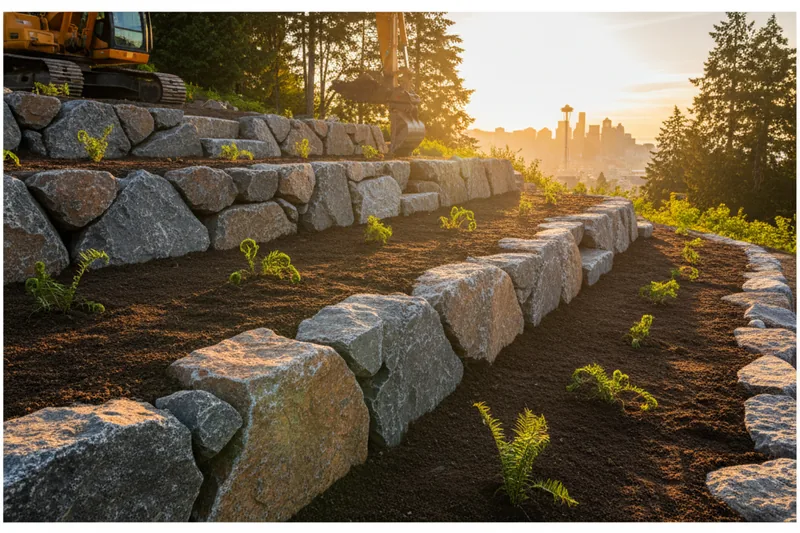
Stone & Rock Retaining Wall Installation Seattle: Natural Rock Wall Solutions

Stone & Rock Retaining Wall Installation Seattle: Natural Rock Wall Solutions

Request a Quote

Stone & Rock Retaining Wall Installation Seattle: Natural Rock Wall Solutions

Seattle’s dramatic hillside terrain, dense Douglas fir canopies, and lush Pacific Northwest landscaping make it one of the most visually striking cities in the country. When it comes to managing slopes and preventing erosion, nothing complements this natural environment quite like a stone or rock retaining wall. For homeowners seeking a solution that is both structurally sound and visually timeless, stone retaining wall installation seattle professionals deliver exactly that – walls that feel like a natural extension of the landscape rather than an afterthought.

In this guide, we cover everything Seattle homeowners need to know: the types of natural stone and rock available locally, how they compare to a concrete retaining wall block in seattle wa, what installation involves, what it costs, and how to make the right choice for your property. A successful retaining wall project depends on careful planning, thoughtful design, and attention to detail at every stage. Stone retaining wall installation in Seattle should be tailored to the specific needs and unique needs of each property, with personalized solutions and a focus on quality workmanship to ensure lasting results.

Why choose a stone or rock retaining wall in Seattle?

Seattle homeowners have no shortage of retaining wall materials to choose from – concrete blocks, poured concrete, timber, and more. So why do so many choose natural stone or rock? The answer comes down to four things: longevity, drainage, aesthetics, and environmental fit. The answer depends on your site conditions, design goals, and personal preferences, as each project may require a different approach for the best results.

A properly installed rock retaining wall seattle can last 50 to 100+ years with minimal maintenance. Natural stone is inherently resistant to moisture, freeze-thaw cycles, and the kind of ground movement Seattle’s clay-heavy soils are known for. Add in the fact that dry-stacked stone walls allow water to drain freely through the structure – dramatically reducing the hydrostatic pressure that causes wall failures during Seattle’s heavy rain seasons – and the case for natural rock becomes very compelling. Stone retaining walls also help protect foundations by preventing water damage and soil erosion, which can threaten the stability of your home.

From an aesthetic standpoint, basalt columns, granite boulders, and moss-covered fieldstone blend seamlessly into Seattle’s natural landscape palette in a way that manufactured concrete simply cannot replicate. The aesthetic appeal and curb appeal of natural stone walls can greatly enhance your property, making outdoor spaces more inviting and visually impressive.

Types of stone and rock used in Seattle retaining walls

When planning your stone retaining wall installation seattle project, your contractor will help you select from several natural material options — each with distinct performance characteristics and visual qualities suited to different landscapes and budgets. Soil conditions in Seattle can also influence whether stone or block materials are the best choice for your retaining wall, as certain materials perform better in specific soil types and slope situations.

Basalt columns

Basalt columns
Volcanic basalt is native to the Pacific Northwest and arguably the most iconic natural building stone in the Seattle area. Its dark gray columns create bold, dramatic walls with a distinctly Northwest character.

Granite boulders

Granite boulders

Large granite boulders are used for boulder retaining walls on steeper slopes. Incredibly durable and low-maintenance, they work well on large-scale residential or commercial projects. Granite boulder walls are an excellent choice for commercial properties due to their durability and ability to handle significant structural loads.

Fieldstone & river rock

Fieldstone & river rock

Rounded fieldstone and river rock create a softer, more naturalistic wall style. Excellent for garden terraces, water features, and properties with a cottage or craftsman aesthetic.

Sandstone & flagstone

Sandstone & flagstone

Sandstone and flagstone offer a flatter, more uniform surface than rounded rock, making them popular for tiered garden walls and low retaining structures with a refined, clean appearance.

Armor rock / rip-rap

Armor rock rip-rap

Large irregular boulders used primarily for erosion control on steep slopes, near waterways, or for very tall structural walls. Common in King County hillside and shoreline projects.

Concrete retaining wall block

Concrete retaining wall block

When natural stone costs exceed budget, a concrete retaining wall block in seattle wa with a natural stone texture finish can deliver a similar visual result at a lower price point.

Natural rock vs concrete retaining wall block in Seattle WA

One of the most common decisions Seattle homeowners face is whether to invest in true natural stone or opt for a concrete retaining wall block in seattle wa. Both are valid choices – but they serve different needs, budgets, and design goals. Choosing the right retaining wall system is essential for ensuring structural integrity and long-lasting results, and professional wall construction plays a key role in the durability and appearance of your landscape.

Stone & rock retaining walls
Concrete retaining wall block
50–100+ year lifespan
20–40 year lifespan
Unique, one-of-a-kind appearance
Consistent texture & color options
Excellent natural drainage
Built-in drainage gaps

Blends with Seattle’s landscape

Stone-texture finishes available

Higher material & labor cost
Lower upfront cost
Requires skilled dry-stack craftsmen
Faster installation timeline

Concrete block retaining walls provide excellent structural support and come in a variety of colors and textures, making them a versatile choice for many homeowners. Poured concrete retaining walls offer maximum strength and versatility for challenging sites, making them ideal for demanding wall construction projects.

For front yards, high-visibility garden terraces, or properties in nature-forward neighborhoods like Seward Park or Magnolia, natural stone delivers an irreplaceable aesthetic return. For backyard functional walls or tighter budgets, a quality concrete retaining wall block in seattle wa with a stone-face finish is a smart, durable alternative. With the right construction methods and materials, you can achieve your desired landscape goals and enjoy a retaining wall system that stands the test of time.

Cost of stone retaining wall installation in Seattle

Natural stone walls command a premium over block alternatives – but for many Seattle homeowners, the long-term value and visual impact justify the investment. Here’s a general cost guide for rock retaining wall seattle projects: These costs are typical for the greater Seattle area.

Dry-stack fieldstone or river rock
$35–$60 / sq. face ft.
Basalt column walls
$45–$75 / sq. face ft.
Granite boulder walls
$55–$90 / sq. face ft.
Armor rock / rip-rap (large scale)
$60–$120+ / sq. face ft.
Concrete block w/ stone-face finish
$25–$45 / sq. face ft.

Stone sourcing in the Pacific Northwest is generally favorable – basalt and granite are locally abundant – but heavy equipment access on steep Seattle lots can significantly increase labor costs. Budget an additional 20–35% for sites with limited access, unstable soils, or slopes over 30 degrees.

Most residential retaining wall projects take 1–4 weeks to complete, depending on wall height, length, site access, and complexity.

Permit and engineering fees apply to any stone retaining wall installation seattle project over 4 feet in height, typically adding $500–$3,000 depending on wall complexity and whether a structural engineer is required by SDCI. A building permit is required for walls over 4 feet, and a separate side sewer permit is needed if the wall’s drainage pipe connects to a city side sewer system.

For guidance on permitting requirements, it is recommended to consult with the local building department or a licensed professional.

Design ideas: natural stone retaining walls for Seattle landscapes

A rock retaining wall seattle contractor can help you design a structure that does far more than just hold back soil. Retaining walls contribute significantly to landscape design by creating usable space, enhancing outdoor living space, and transforming your outdoor space into a more functional and attractive area. Professional stone retaining wall installation typically increases property value by creating usable space and improving drainage and erosion control. Here are some of the most popular approaches for Seattle properties:

Dry-stack terraced garden walls

Cascading tiers of dry-stacked basalt or fieldstone create a stunning visual backdrop for native plantings – sword ferns, salal, Oregon grape – that thrive in Seattle’s climate. Each terrace level becomes a usable planting bed, turning a difficult slope into a lush, productive garden space.

Boulder accent walls

Large granite or basalt boulders set into a hillside create a bold, sculptural statement. Often used alongside native grasses and ornamental trees in contemporary Pacific Northwest garden designs, these walls require minimal maintenance and age beautifully over time.

Moss and fern integration

Seattle’s humidity encourages moss to naturally colonize stone walls over time, creating that beloved aged, woodland look. Many homeowners planning stone retaining wall installation seattle projects actively encourage moss growth by seeding walls post-installation – a technique that creates a mature appearance within one to two seasons.

Water feature integration

Rock retaining walls naturally lend themselves to integrated water features – small waterfalls, rill channels, or recirculating streams – that flow through or over the wall face. A popular upgrade in upscale Seattle landscaping projects, these features capitalize on the city’s abundant water and natural aesthetics.

Stone retaining wall installation process in Seattle

Quality stone retaining wall installation seattle is a craft – and understanding the process will help you evaluate contractors and set accurate timeline expectations. Installing a retaining wall is a significant project that requires careful planning, physical labor, and attention to detail.

It’s important to choose experienced retaining wall contractors, trusted retaining wall contractors, and retaining wall experts who deliver quality workmanship and pay attention to every detail throughout the retaining wall construction process. Professional wall contractors and retaining wall contractors in Seattle ensure your project is completed with the highest standards of craftsmanship and reliability.

1. Site survey & design planning

The contractor assesses slope gradient, soil type, drainage patterns, and load requirements. Stone type, wall height, and design layout are finalized. SDCI permit applications are filed if needed.

2. Excavation & base trench preparation

The contractor assesses slope gradient, soil type, drainage patterns, and load requirements. Stone type, wall height, and design layout are finalized. SDCI permit applications are filed if needed.

3. Drainage system installation

Perforated drain pipe and clean gravel backfill are placed before the first stone course. For proper drainage management, do not use soil for backfill immediately behind the wall; instead, use gravel and incorporate weep holes for water release. Gravel backfill should be used when stacking stone layers to enhance drainage and stability. Install a perforated drain pipe (drainage tile) behind the first course of stones, wrapped in fabric to prevent clogging. Integrating drainage solutions like French drains and weep holes helps prevent water buildup and water damage behind the wall by directing excess water away from the structure. For larger rock walls, weep holes or drainage channels are incorporated into the design.

4. Stone placement & dry stacking

Stones are selected and placed course by course, with a slight backward batter (lean into the slope) for stability. Larger stones anchor lower courses; smaller stones fill upper courses and gaps.

5. Backfill & compaction

Gravel backfill is compacted in lifts behind the wall as each course is laid. Proper compaction prevents future settlement and lateral movement.

6. Cap & finishing details

Capstones are set on the top course. Planting pockets are prepared, soil is graded for drainage, and the site is cleaned up. Native plants or groundcovers are often installed at this stage.

Choosing the right contractor for rock retaining walls in Seattle

Not every contractor has the skills to build a quality rock retaining wall seattle installation. Dry-stack stone work in particular is a specialty craft – and the difference between a wall that lasts 80 years and one that shifts after the first rainy season often comes down to the installer’s expertise. Here’s what to look for:

Contractors such as Greenway Landscape Design & Services, Inc. and Lee’s General Landscaping also specialize in stone wall design and installation, making them an ideal choice for homeowners seeking quality workmanship and attention to detail.

The ideal choice among trusted local contractors often comes down to their commitment to tailored solutions, innovative designs, and superior craftsmanship.

  • Demonstrated portfolio of natural stone and rock retaining wall projects in Seattle
  • Knowledge of King County soil types, drainage requirements, and SDCI permit processes
  • Experience sourcing local Pacific Northwest stone (basalt, granite, river rock)
  • Washington State contractor license and liability insurance
  • Clear written proposals that include drainage details – not just the wall itself
  • Local references from completed stone retaining wall installation seattle projects you can visit in person

Maintenance: keeping your stone wall looking its best

One of the greatest advantages of a natural rock retaining wall seattle installation is how little ongoing maintenance it requires. That said, a few simple habits will keep your wall performing well for decades:

  • Inspect the wall annually after winter for any stones that have shifted, settled, or become dislodged – catch small movement early before it cascades.
  • Keep drain outlets and weep holes clear of debris, especially after autumn leaf fall.
  • Allow moss and low-growing groundcovers to colonize naturally – they stabilize joint material and are visually desirable in Seattle’s landscape aesthetic.
  • Avoid planting large shrubs or trees directly against the wall – mature root systems can displace stones over time.
  • Re-point or repack joint material in dry-stack walls every 10–15 years as needed.

Frequently asked questions

How long does a natural stone retaining wall last in Seattle?

Natural stone retaining walls – particularly dry-stacked basalt or granite – can last 50 to 100+ years with minimal maintenance. Their longevity in Seattle’s wet climate is largely due to their natural drainage characteristics, which prevent the hydrostatic pressure buildup that damages other wall types.

Is a rock retaining wall better than a concrete block wall in Seattle?

For longevity, natural aesthetics, and properties where visual impact matters, natural rock walls are hard to beat. However, a quality concrete retaining wall block in Seattle WA with a stone-face finish offers an excellent middle ground – lower cost, faster installation, and a very similar visual result for most residential applications.

Do I need a permit for a stone retaining wall in Seattle?

Seattle requires permits for retaining walls exceeding 4 feet in height from the bottom of the footing. Walls near property lines, critical areas, or structures may require review even if shorter. Always confirm with SDCI or your licensed contractor before beginning work.

What stone is most commonly used in Seattle retaining walls?

Basalt is the most iconic and widely used natural stone for retaining walls in the Seattle area, owing to its local availability, dark gray color, and structural strength. Granite boulders are popular for large-scale boulder walls, while river rock and fieldstone are commonly used for garden terrace and decorative walls.

How much does stone retaining wall installation cost in Seattle?

Costs typically range from $35 to $90+ per square foot installed, depending on stone type, wall height, site access, and drainage requirements. Basalt column walls run $45–$75, while granite boulder walls can reach $55–$90+. Get multiple quotes from licensed Seattle contractors to compare accurately.

Request a Quote

Seattle’s dramatic hillside terrain, dense Douglas fir canopies, and lush Pacific Northwest landscaping make it one of the most visually striking cities in the country. When it comes to managing slopes and preventing erosion, nothing complements this natural environment quite like a stone or rock retaining wall. For homeowners seeking a solution that is both structurally sound and visually timeless, stone retaining wall installation seattle professionals deliver exactly that – walls that feel like a natural extension of the landscape rather than an afterthought.

In this guide, we cover everything Seattle homeowners need to know: the types of natural stone and rock available locally, how they compare to a concrete retaining wall block in seattle wa, what installation involves, what it costs, and how to make the right choice for your property. A successful retaining wall project depends on careful planning, thoughtful design, and attention to detail at every stage. Stone retaining wall installation in Seattle should be tailored to the specific needs and unique needs of each property, with personalized solutions and a focus on quality workmanship to ensure lasting results.

Why choose a stone or rock retaining wall in Seattle?

Seattle homeowners have no shortage of retaining wall materials to choose from – concrete blocks, poured concrete, timber, and more. So why do so many choose natural stone or rock? The answer comes down to four things: longevity, drainage, aesthetics, and environmental fit. The answer depends on your site conditions, design goals, and personal preferences, as each project may require a different approach for the best results.

A properly installed rock retaining wall seattle can last 50 to 100+ years with minimal maintenance. Natural stone is inherently resistant to moisture, freeze-thaw cycles, and the kind of ground movement Seattle’s clay-heavy soils are known for. Add in the fact that dry-stacked stone walls allow water to drain freely through the structure – dramatically reducing the hydrostatic pressure that causes wall failures during Seattle’s heavy rain seasons – and the case for natural rock becomes very compelling. Stone retaining walls also help protect foundations by preventing water damage and soil erosion, which can threaten the stability of your home.

From an aesthetic standpoint, basalt columns, granite boulders, and moss-covered fieldstone blend seamlessly into Seattle’s natural landscape palette in a way that manufactured concrete simply cannot replicate. The aesthetic appeal and curb appeal of natural stone walls can greatly enhance your property, making outdoor spaces more inviting and visually impressive.

Types of stone and rock used in Seattle retaining walls

When planning your stone retaining wall installation seattle project, your contractor will help you select from several natural material options — each with distinct performance characteristics and visual qualities suited to different landscapes and budgets. Soil conditions in Seattle can also influence whether stone or block materials are the best choice for your retaining wall, as certain materials perform better in specific soil types and slope situations.

Basalt columns

Basalt columns
Volcanic basalt is native to the Pacific Northwest and arguably the most iconic natural building stone in the Seattle area. Its dark gray columns create bold, dramatic walls with a distinctly Northwest character.

Granite boulders

Granite boulders

Large granite boulders are used for boulder retaining walls on steeper slopes. Incredibly durable and low-maintenance, they work well on large-scale residential or commercial projects. Granite boulder walls are an excellent choice for commercial properties due to their durability and ability to handle significant structural loads.

Fieldstone & river rock

Fieldstone & river rock

Rounded fieldstone and river rock create a softer, more naturalistic wall style. Excellent for garden terraces, water features, and properties with a cottage or craftsman aesthetic.

Sandstone & flagstone

Sandstone & flagstone

Sandstone and flagstone offer a flatter, more uniform surface than rounded rock, making them popular for tiered garden walls and low retaining structures with a refined, clean appearance.

Armor rock / rip-rap

Armor rock rip-rap

Large irregular boulders used primarily for erosion control on steep slopes, near waterways, or for very tall structural walls. Common in King County hillside and shoreline projects.

Concrete retaining wall block

Concrete retaining wall block

When natural stone costs exceed budget, a concrete retaining wall block in seattle wa with a natural stone texture finish can deliver a similar visual result at a lower price point.

Natural rock vs concrete retaining wall block in Seattle WA

One of the most common decisions Seattle homeowners face is whether to invest in true natural stone or opt for a concrete retaining wall block in seattle wa. Both are valid choices – but they serve different needs, budgets, and design goals. Choosing the right retaining wall system is essential for ensuring structural integrity and long-lasting results, and professional wall construction plays a key role in the durability and appearance of your landscape.

Stone & rock retaining walls
Concrete retaining wall block
50–100+ year lifespan
20–40 year lifespan
Unique, one-of-a-kind appearance
Consistent texture & color options
Excellent natural drainage
Built-in drainage gaps

Blends with Seattle’s landscape

Stone-texture finishes available

Higher material & labor cost
Lower upfront cost
Requires skilled dry-stack craftsmen
Faster installation timeline

Concrete block retaining walls provide excellent structural support and come in a variety of colors and textures, making them a versatile choice for many homeowners. Poured concrete retaining walls offer maximum strength and versatility for challenging sites, making them ideal for demanding wall construction projects.

For front yards, high-visibility garden terraces, or properties in nature-forward neighborhoods like Seward Park or Magnolia, natural stone delivers an irreplaceable aesthetic return. For backyard functional walls or tighter budgets, a quality concrete retaining wall block in seattle wa with a stone-face finish is a smart, durable alternative. With the right construction methods and materials, you can achieve your desired landscape goals and enjoy a retaining wall system that stands the test of time.

Cost of stone retaining wall installation in Seattle

Natural stone walls command a premium over block alternatives – but for many Seattle homeowners, the long-term value and visual impact justify the investment. Here’s a general cost guide for rock retaining wall seattle projects: These costs are typical for the greater Seattle area.

Dry-stack fieldstone or river rock
$35–$60 / sq. face ft.
Basalt column walls
$45–$75 / sq. face ft.
Granite boulder walls
$55–$90 / sq. face ft.
Armor rock / rip-rap (large scale)
$60–$120+ / sq. face ft.
Concrete block w/ stone-face finish
$25–$45 / sq. face ft.

Stone sourcing in the Pacific Northwest is generally favorable – basalt and granite are locally abundant – but heavy equipment access on steep Seattle lots can significantly increase labor costs. Budget an additional 20–35% for sites with limited access, unstable soils, or slopes over 30 degrees.

Most residential retaining wall projects take 1–4 weeks to complete, depending on wall height, length, site access, and complexity.

Permit and engineering fees apply to any stone retaining wall installation seattle project over 4 feet in height, typically adding $500–$3,000 depending on wall complexity and whether a structural engineer is required by SDCI. A building permit is required for walls over 4 feet, and a separate side sewer permit is needed if the wall’s drainage pipe connects to a city side sewer system.

For guidance on permitting requirements, it is recommended to consult with the local building department or a licensed professional.

Design ideas: natural stone retaining walls for Seattle landscapes

A rock retaining wall seattle contractor can help you design a structure that does far more than just hold back soil. Retaining walls contribute significantly to landscape design by creating usable space, enhancing outdoor living space, and transforming your outdoor space into a more functional and attractive area. Professional stone retaining wall installation typically increases property value by creating usable space and improving drainage and erosion control. Here are some of the most popular approaches for Seattle properties:

Dry-stack terraced garden walls

Cascading tiers of dry-stacked basalt or fieldstone create a stunning visual backdrop for native plantings – sword ferns, salal, Oregon grape – that thrive in Seattle’s climate. Each terrace level becomes a usable planting bed, turning a difficult slope into a lush, productive garden space.

Boulder accent walls

Large granite or basalt boulders set into a hillside create a bold, sculptural statement. Often used alongside native grasses and ornamental trees in contemporary Pacific Northwest garden designs, these walls require minimal maintenance and age beautifully over time.

Moss and fern integration

Seattle’s humidity encourages moss to naturally colonize stone walls over time, creating that beloved aged, woodland look. Many homeowners planning stone retaining wall installation seattle projects actively encourage moss growth by seeding walls post-installation – a technique that creates a mature appearance within one to two seasons.

Water feature integration

Rock retaining walls naturally lend themselves to integrated water features – small waterfalls, rill channels, or recirculating streams – that flow through or over the wall face. A popular upgrade in upscale Seattle landscaping projects, these features capitalize on the city’s abundant water and natural aesthetics.

Stone retaining wall installation process in Seattle

Quality stone retaining wall installation seattle is a craft – and understanding the process will help you evaluate contractors and set accurate timeline expectations. Installing a retaining wall is a significant project that requires careful planning, physical labor, and attention to detail.

It’s important to choose experienced retaining wall contractors, trusted retaining wall contractors, and retaining wall experts who deliver quality workmanship and pay attention to every detail throughout the retaining wall construction process. Professional wall contractors and retaining wall contractors in Seattle ensure your project is completed with the highest standards of craftsmanship and reliability.

1. Site survey & design planning

The contractor assesses slope gradient, soil type, drainage patterns, and load requirements. Stone type, wall height, and design layout are finalized. SDCI permit applications are filed if needed.

2. Excavation & base trench preparation

The contractor assesses slope gradient, soil type, drainage patterns, and load requirements. Stone type, wall height, and design layout are finalized. SDCI permit applications are filed if needed.

3. Drainage system installation

Perforated drain pipe and clean gravel backfill are placed before the first stone course. For proper drainage management, do not use soil for backfill immediately behind the wall; instead, use gravel and incorporate weep holes for water release. Gravel backfill should be used when stacking stone layers to enhance drainage and stability. Install a perforated drain pipe (drainage tile) behind the first course of stones, wrapped in fabric to prevent clogging. Integrating drainage solutions like French drains and weep holes helps prevent water buildup and water damage behind the wall by directing excess water away from the structure. For larger rock walls, weep holes or drainage channels are incorporated into the design.

4. Stone placement & dry stacking

Stones are selected and placed course by course, with a slight backward batter (lean into the slope) for stability. Larger stones anchor lower courses; smaller stones fill upper courses and gaps.

5. Backfill & compaction

Gravel backfill is compacted in lifts behind the wall as each course is laid. Proper compaction prevents future settlement and lateral movement.

6. Cap & finishing details

Capstones are set on the top course. Planting pockets are prepared, soil is graded for drainage, and the site is cleaned up. Native plants or groundcovers are often installed at this stage.

Choosing the right contractor for rock retaining walls in Seattle

Not every contractor has the skills to build a quality rock retaining wall seattle installation. Dry-stack stone work in particular is a specialty craft – and the difference between a wall that lasts 80 years and one that shifts after the first rainy season often comes down to the installer’s expertise. Here’s what to look for:

Contractors such as Greenway Landscape Design & Services, Inc. and Lee’s General Landscaping also specialize in stone wall design and installation, making them an ideal choice for homeowners seeking quality workmanship and attention to detail.

The ideal choice among trusted local contractors often comes down to their commitment to tailored solutions, innovative designs, and superior craftsmanship.

  • Demonstrated portfolio of natural stone and rock retaining wall projects in Seattle
  • Knowledge of King County soil types, drainage requirements, and SDCI permit processes
  • Experience sourcing local Pacific Northwest stone (basalt, granite, river rock)
  • Washington State contractor license and liability insurance
  • Clear written proposals that include drainage details – not just the wall itself
  • Local references from completed stone retaining wall installation seattle projects you can visit in person

Maintenance: keeping your stone wall looking its best

One of the greatest advantages of a natural rock retaining wall seattle installation is how little ongoing maintenance it requires. That said, a few simple habits will keep your wall performing well for decades:

  • Inspect the wall annually after winter for any stones that have shifted, settled, or become dislodged – catch small movement early before it cascades.
  • Keep drain outlets and weep holes clear of debris, especially after autumn leaf fall.
  • Allow moss and low-growing groundcovers to colonize naturally – they stabilize joint material and are visually desirable in Seattle’s landscape aesthetic.
  • Avoid planting large shrubs or trees directly against the wall – mature root systems can displace stones over time.
  • Re-point or repack joint material in dry-stack walls every 10–15 years as needed.

Frequently asked questions

How long does a natural stone retaining wall last in Seattle?

Natural stone retaining walls – particularly dry-stacked basalt or granite – can last 50 to 100+ years with minimal maintenance. Their longevity in Seattle’s wet climate is largely due to their natural drainage characteristics, which prevent the hydrostatic pressure buildup that damages other wall types.

Is a rock retaining wall better than a concrete block wall in Seattle?

For longevity, natural aesthetics, and properties where visual impact matters, natural rock walls are hard to beat. However, a quality concrete retaining wall block in Seattle WA with a stone-face finish offers an excellent middle ground – lower cost, faster installation, and a very similar visual result for most residential applications.

Do I need a permit for a stone retaining wall in Seattle?

Seattle requires permits for retaining walls exceeding 4 feet in height from the bottom of the footing. Walls near property lines, critical areas, or structures may require review even if shorter. Always confirm with SDCI or your licensed contractor before beginning work.

What stone is most commonly used in Seattle retaining walls?

Basalt is the most iconic and widely used natural stone for retaining walls in the Seattle area, owing to its local availability, dark gray color, and structural strength. Granite boulders are popular for large-scale boulder walls, while river rock and fieldstone are commonly used for garden terrace and decorative walls.

How much does stone retaining wall installation cost in Seattle?

Costs typically range from $35 to $90+ per square foot installed, depending on stone type, wall height, site access, and drainage requirements. Basalt column walls run $45–$75, while granite boulder walls can reach $55–$90+. Get multiple quotes from licensed Seattle contractors to compare accurately.