
7 Warning Signs Your Retaining Wall Is Failing (And What to Do About Each One)
Retaining Wall Repair Seattle WA | Signs You Need Immediate Fix
Understanding the Lifespan of a Retaining Wall
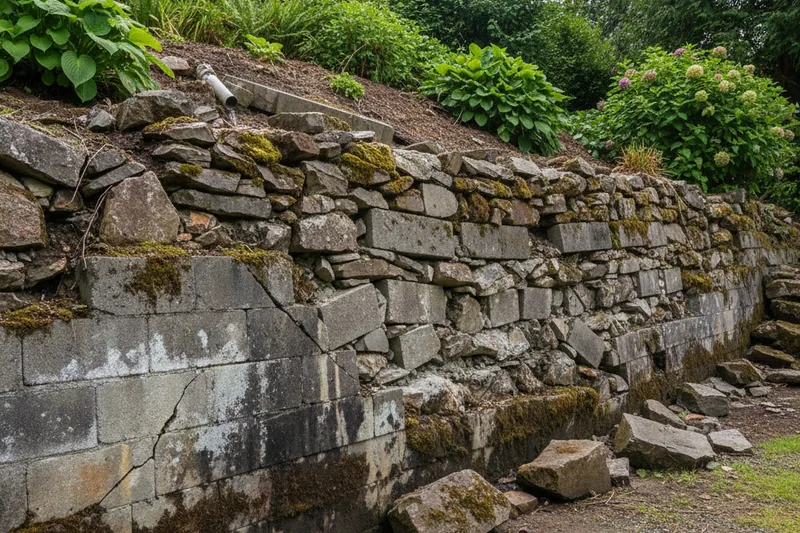
A properly designed and installed retaining wall in Seattle, WA, should last for decades. However, the Pacific Northwest’s unique climate, characterized by heavy rainfall and seismic activity, places immense stress on these structures. Over time, even the most robust walls can show signs of distress.
Common Warning Signs Your Retaining Wall Needs Repair
Early detection of retaining wall problems can save homeowners significant repair costs and prevent catastrophic failures. Here are the critical signs to look for:
1. Cracks in the Wall Face
- Hairline Cracks: Small, superficial cracks might be cosmetic, but they can also indicate minor settling or soil movement. Monitor these closely.
- Step Cracks: Cracks that follow the mortar joints in a stepped pattern often point to differential settlement or foundation issues.
- Horizontal Cracks: These are particularly concerning as they suggest significant hydrostatic pressure buildup behind the wall, pushing it outwards.
- Vertical Cracks: While less common, vertical cracks can indicate issues with the wall’s structural integrity or uneven loading.
2. Leaning or Bulging
A retaining wall should be perfectly plumb (vertical) or have a slight batter (slope backward into the retained soil). Any noticeable leaning or bulging indicates a serious problem:
- Top of the Wall Leaning Outward: This is a classic sign of excessive pressure from the soil or inadequate drainage behind the wall.
- Mid-Wall Bulging: Often caused by saturated soil or improper compaction during installation, leading to localized pressure points.
- Overall Tilting: If the entire wall is tilting, it suggests a failure of the foundation or significant soil instability.
3. Drainage Issues
Effective drainage is crucial for a retaining wall’s longevity. Signs of drainage problems include:
- Water Pooling: Water accumulating at the base of the wall or on the retained soil side indicates a clogged or insufficient drainage system.
- Efflorescence: White, powdery deposits on the wall’s surface are mineral salts left behind by evaporating water, signaling moisture penetration.
- Saturated Soil: Constantly wet or soggy soil behind the wall suggests that water is not being properly diverted.
4. Shifting or Separating Blocks/Stones
Individual components of the wall should remain tightly interlocked or mortared. Gaps or movement are red flags:
- Gaps Between Blocks: Indicates movement within the wall structure, often due to soil pressure or freeze-thaw cycles.
- Dislodged Stones: If stones or blocks are visibly out of place, the wall’s stability is compromised.
5. Foundation Problems
The base of the retaining wall is its most critical component. Signs of foundation issues include:
- Sinking or Settling: Portions of the wall appearing lower than others suggest an unstable foundation.
- Exposed Footing: If the base of the wall, which should be buried, becomes visible, it indicates soil erosion or settlement.
Why Retaining Walls Fail in Seattle
Several factors contribute to retaining wall failures in the Seattle area:
- Hydrostatic Pressure: The most common culprit. Poor drainage allows water to accumulate behind the wall, creating immense pressure that can push even well-built walls outward.
- Poor Soil Compaction: Inadequate compaction of the backfill material during construction can lead to settlement and uneven pressure distribution.
- Improper Design or Installation: Walls not designed for the specific soil conditions or built without proper techniques (e.g., lack of geogrid, insufficient base) are prone to failure.
- Freeze-Thaw Cycles: Although less severe than in colder climates, Seattle does experience freezing temperatures, which can cause water in the soil to expand and contract, stressing the wall.
- Seismic Activity: Seattle is in an active seismic zone. Earthquakes can cause soil liquefaction and ground movement, leading to wall instability.
- Vegetation Growth: Tree roots growing behind or within the wall can exert pressure and compromise its structure.
When to Call a Professional for Retaining Wall Repair
While minor cosmetic issues might be DIY fixes, any of the structural warning signs mentioned above warrant immediate professional assessment. Ignoring these signs can lead to:
- Increased Damage: Small problems can quickly escalate into major structural failures, costing significantly more to repair.
- Property Damage: A failing retaining wall can damage adjacent structures, landscaping, and even your home’s foundation.
- Safety Hazards: A collapsing wall poses a serious risk to people and pets.
Permit Requirements for Retaining Wall Repair in Seattle
Navigating permit requirements for retaining wall repair in Seattle can be complex. Generally, a permit is required if:
- The wall is taller than 4 feet, measured from the bottom of the footing to the top of the wall.
- The wall is supporting a “surcharge” (e.g., a driveway, building, or another wall) regardless of height.
- The wall is not in an Environmentally Critical Area (ECA).
- Significant Structural Alterations: If your wall is taller than 4 feet, and the repair requires dismantling and rebuilding a significant portion of the structural face or altering the original engineering footprint, you will likely need a construction permit.
- Environmentally Critical Areas: Seattle has strictly mapped steep slope and landslide-prone zones. If your property falls within an ECA, even minor repairs to a retaining structure may require city review to ensure the hillside is not destabilized during the repair process.
To verify your property’s specific zoning and permit requirements, you should always consult the official Seattle property and building code portal before beginning any excavation.
The Retaining Wall Repair Process: What to Expect
A professional retaining wall repair is an invasive construction process. It requires heavy machinery, significant material export, and precise engineering to prevent future failures.
- Site Assessment and Access Planning: Contractors must first determine how to get machinery into your yard. Seattle properties often feature tight lot lines and narrow access points. Utilizing specialized mini-excavators with retractable rubber tracks is often necessary to reach backyard failures without destroying existing hardscaping or custom lawns.
- Shoring and Excavation: Before the damaged wall can be removed, the hillside behind it must be temporarily stabilized. The contractor will then excavate the saturated, heavy soil from behind the wall. This native soil cannot be reused for structural backfill and must be hauled away to a municipal dumping facility.
- Drainage Correction: The old, clogged drainage pipe is removed. A new 4-inch perforated PVC pipe is installed at the correct downward slope, wrapped completely in high-grade geotechnical filter fabric, and surrounded by clean, washed angular gravel.
- Structural Rebuilding: The base trench is re-compacted with a plate compactor. The structural blocks or stones are then re-laid. For walls taller than 3 feet, new layers of geogrid reinforcement mesh must be installed between the blocks and tied deep into the newly compacted soil to anchor the wall face to the hillside.
- Final Grading: The surface above the wall is graded to ensure that surface water flows away from the back of the wall rather than pooling directly behind the structure.
Cost Factors for Retaining Wall Repair
The cost of repairing a structural barrier depends heavily on the extent of the damage and the logistics of the site.
- Extent of Excavation: Digging out wet, heavy soil by hand because a machine cannot fit through a side gate will exponentially increase labor costs.
- Material Reuse: If you have a natural stone rockery, the existing boulders can often be reused, significantly lowering material costs. If a concrete block wall has cracked or snapped its interlocking pins, new blocks must be purchased.
- Access to Storm Drains: Rerouting a new drainage pipe requires a legal and safe discharge point. Trenching a new line to connect to the municipal storm sewer system adds linear footage to the overall project cost.
When to Choose Replacement Over Repair
While minor localized bulging can sometimes be corrected by digging out a small section of the wall and replacing a broken pipe, systemic failures require total replacement. If a wall is leaning more than 15 percent off its vertical axis across its entire length, the structural integrity of the base foundation has been lost. Patching a wall in this condition is a temporary bandage.
The heavy rains of the Pacific Northwest will quickly expose any shortcuts taken during a repair. Investing in a properly engineered replacement, complete with a robust engineered drainage system and properly compacted angular gravel, is the only permanent solution to severe hydrostatic blowout.
When your landscape shows the quantifiable signs of structural shifting, immediate intervention is required to protect your property value and ensure neighborhood safety. Evaluating drainage efficiency, monitoring crack width, and measuring vertical plumb lines will give you the hard data needed to make an informed decision.
If you suspect your structural barriers are failing under the weight of Seattle’s seasonal rains, securing a professional site evaluation is the critical first step. As a rockeries expert serving the local region for decades, New Life Rockeries provides precise, data-driven assessments to diagnose the exact cause of the failure and engineer a permanent, structurally sound solution.
Written by
Keith EneixCo-Owner, New Life Rockeries
Keith Eneix is a co-owner of New Life Rockeries alongside his brother Neil Eneix. He began helping with operations in 2007 and has been involved ever since. He writes from nearly two decades of hands-on experience with retaining walls, rockeries, and hardscaping across the greater Seattle area.
View full profile →Ready to Start Your Project?
New Life Rockeries has been building retaining walls, rockeries, and hardscaping across the greater Seattle area since 1975. Get your free estimate today.