
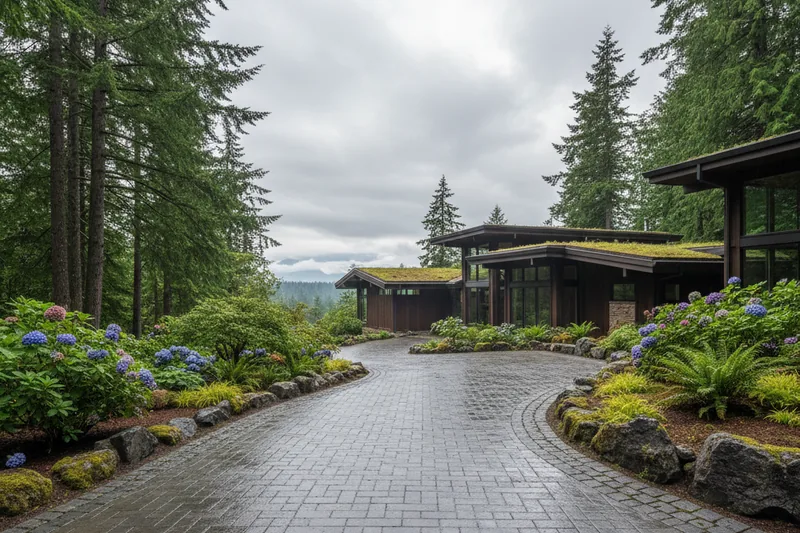
Paving a Driveway in Seattle: What Affects the Cost and What to Budget For
Picture this — you’ve just pulled through the car wash after a long day at work. Your car is fresh and shiny!
But just as you get home, you hear that familiar crackling under your wheels. Oh, that’s right. You have a gravel driveway. And just like that, your shiny new car has a wonderful layer of residual dirt and dust.
If only you had a paved driveway.
By now, you’re probably wondering, how much does it cost to pave a driveway? Continue reading to find out!
Average Cost to Pave Driveway – Benefits
Before we start justifying why you should shell out your hard-earned cash for a steaming pile of asphalt, let’s talk about the benefits of a paved driveway (beyond the scenario described above).
Well one aspect to consider is the curb appeal (and consequently, the value) of your home. No matter how nice you keep the inside of your home, the entryway is the first thing people see. And if they see a driveway filled with cracks, dirt, weeds, or drive up on a heap of gravel, it’ll blunt the long-term value of the home.
What’s more is that when people see inconsistencies in the driveway, they often speculate that there may be foundational issues with the property.
Cost to Pave a Driveway
There are two major factors that impact the cost of paving a driveway. These are:
- The amount of raw material required
- And the type of look and material desired
Material options for installing a driveway include:
- Gravel
- Flagstones
- Asphalt
- Cement
Do note that each one of these comes with their own set of pros and cons. However, most people gravitate toward asphalt and cement for their ease of maintenance (and cost-effectiveness).
Calculating your Driveway Square Footage
Next, you’ll need to know the exact square footage of the area you intend to pave.
To do this is a simple calculation of length x width. Measure the length of your driveway space and then multiply that by the width.
Let’s say your driveway is 30 feet long and 15 feet wide. You would need 450 square feet.
Cost of Materials
Asphalt is the cheapest option for forming a driveway, averaging around two to five dollars per foot. In this scenario, the materials could be as cheap as $900 or as expensive as $1,750.
This is much cheaper than cement, which can be more than double this cost.
Cost of Labor
Labor cost is another factor to consider for your driveway, and it pays to have it done professionally.
How Much to Pave a Driveway
The average cost to pave a driveway varies based on your needs, materials, and if you plan to do it yourself or not. As a ballpark estimate though, you should plan to spend at least $2,000 on a quality paver driveway contractors.
Picture this — you’ve just pulled through the car wash after a long day at work. Your car is fresh and shiny!
But just as you get home, you hear that familiar crackling under your wheels. Oh, that’s right. You have a gravel driveway. And just like that, your shiny new car has a wonderful layer of residual dirt and dust.
If only you had a paved driveway.
By now, you’re probably wondering, how much does it cost to pave a driveway? Continue reading to find out!
Average Cost to Pave Driveway – Benefits
Before we start justifying why you should shell out your hard-earned cash for a steaming pile of asphalt, let’s talk about the benefits of a paved driveway (beyond the scenario described above).
Well one aspect to consider is the curb appeal (and consequently, the value) of your home. No matter how nice you keep the inside of your home, the entryway is the first thing people see. And if they see a driveway filled with cracks, dirt, weeds, or drive up on a heap of gravel, it’ll blunt the long-term value of the home.
What’s more is that when people see inconsistencies in the driveway, they often speculate that there may be foundational issues with the property.
Cost to Pave a Driveway
There are two major factors that impact the cost of paving a driveway. These are:
- The amount of raw material required
- And the type of look and material desired
Material options for installing a driveway include:
- Gravel
- Flagstones
- Asphalt
- Cement
Do note that each one of these comes with their own set of pros and cons. However, most people gravitate toward asphalt and cement for their ease of maintenance (and cost-effectiveness).
Calculating your Driveway Square Footage
Next, you’ll need to know the exact square footage of the area you intend to pave.
To do this is a simple calculation of length x width. Measure the length of your driveway space and then multiply that by the width.
Let’s say your driveway is 30 feet long and 15 feet wide. You would need 450 square feet.
Cost of Materials
Asphalt is the cheapest option for forming a driveway, averaging around two to five dollars per foot. In this scenario, the materials could be as cheap as $900 or as expensive as $1,750.
This is much cheaper than cement, which can be more than double this cost.
Cost of Labor
Labor cost is another factor to consider for your driveway, and it pays to have it done professionally.
How Much to Pave a Driveway
The average cost to pave a driveway varies based on your needs, materials, and if you plan to do it yourself or not. As a ballpark estimate though, you should plan to spend at least $2,000 on a quality paver driveway contractors.
Ready to move from research to action?
New Life Rockeries has served the Seattle area for 50+ years. Get a free, no-obligation estimate from our team.
Get Your Free Estimate →
Written by
Keith EneixCo-Owner, New Life Rockeries
Keith Eneix is a co-owner of New Life Rockeries alongside his brother Neil Eneix. He began helping with operations in 2007 and has been involved ever since. He writes from nearly two decades of hands-on experience with retaining walls, rockeries, and hardscaping across the greater Seattle area.
View full profile →Ready to Start Your Project?
New Life Rockeries has been building retaining walls, rockeries, and hardscaping across the greater Seattle area since 1975. Get your free estimate today.