
Lifespan of a Retaining Wall: How Long Can You Expect Each Material to Last?
Lifespan of a Retaining Wall: How Long Can You Expect Each Material to Last?
A retaining wall is a significant investment, whether it’s a small garden border or a massive terraced landscape. You want it to last, but how long can you realistically expect it to stand strong against the forces of nature?
The lifespan of a retaining wall varies dramatically based on the material, construction quality, and environmental factors. Here’s a breakdown of what you can expect from common retaining wall materials:
Material Lifespans: From Decades to Centuries
The material you choose is the biggest predictor of your wall’s longevity. Here’s a general guide:
-
Timber Retaining Walls: 15-30 Years
Often the most affordable upfront, timber walls are also the shortest-lived. Even pressure-treated wood will eventually succumb to rot, insects, and the elements. In our wet climate, 15-20 years is a realistic expectation, though some can last up to 30 years with ideal conditions and excellent drainage.
-
Segmental Concrete Block Retaining Walls: 50-100 Years
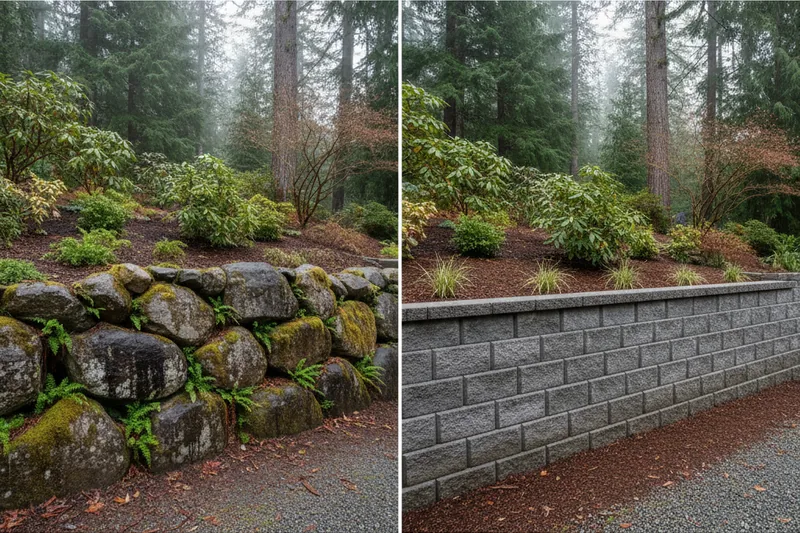
These are the most popular choice for residential retaining walls due to their versatility, aesthetic appeal, and impressive durability. Made from high-strength concrete, these blocks are designed to interlock and withstand significant pressure. With proper installation and drainage, a concrete block wall can easily last 50-75 years, with many exceeding 100 years.
-
Natural Stone Retaining Walls: 100+ Years (Often Centuries)
The undisputed champion of longevity, natural stone walls are built to last generations. Whether it’s granite, basalt, or limestone, these walls are incredibly durable and resistant to weathering. Many historic stone walls around the world are still standing strong after hundreds, even thousands, of years. The main factor in their lifespan is the quality of the mortar (if used) and the stability of the foundation.
-
Poured Concrete Retaining Walls: 75-100+ Years
Poured concrete walls are exceptionally strong and durable, offering a seamless, monolithic structure. Their lifespan is comparable to natural stone, often exceeding 100 years, especially when reinforced with rebar. The key to their longevity lies in proper mix design, curing, and adequate drainage.
It’s worth noting that a railroad tie retaining wall is often used for small garden beds or budget-conscious projects, but it is rarely a “permanent” solution. In wet climates like ours, wood is also a target for termites and other wood-boring insects, which can drastically shorten its functional life.
Why Do Retaining Walls Fail? (The Longevity Killers)
A wall’s lifespan is rarely cut short by the material “wearing out.” Instead, failure is usually caused by external forces.
Poor Drainage
Water is the number one cause of retaining wall collapse. When water gets trapped behind a wall, it creates “hydrostatic pressure”—thousands of pounds of force pushing against the back of the structure. If your wall doesn’t have a dedicated drainage system (like a gravel backfill and a perforated pipe), even a stone wall can eventually bulge and fail.
Soil Conditions and Surcharge
The type of soil your wall is holding back matters. Clay-heavy soils expand when wet, exerting far more pressure than sandy soils. Furthermore, if you add a “surcharge”—extra weight like a driveway or a shed—above the wall, the structure must be engineered to handle that extra load, or it will lean and crack prematurely.
Construction Errors
A “cheap” wall is often the most expensive one you’ll ever buy. If a contractor skips the leveling pad, fails to compact the soil in “lifts,” or uses the wrong type of backfill, the wall will likely show signs of retaining wall cracks within the first three years.
Pricing vs. Longevity: Is It Worth the Upfront Cost?
When choosing a material, you have to weigh the initial price against the cost over time.
Material
Upfront Cost
Lifespan
Cost Per Year (Est.)
Timber
Low
15 Years
High (Due to replacement)
Concrete Block
Moderate
75 Years
Low
Natural Stone
High
100+ Years
Very Low
While wood is cheap today, you will likely have to pay to tear it down and rebuild it three or four times over the lifespan of a single stone wall. For most permanent residences, concrete blocks or stone offer the best long-term value.
When to Repair vs. Replace Your Retaining Wall
Not every damaged wall needs to be torn down. Understanding the warning signs can help you decide whether to call for a repair or a full replacement.
-
Repair it if: You notice minor mortar crumbling, small hairline cracks, or clogged drainage holes. These can often be fixed with “repointing” or by clearing the drainage pathways.
-
Replace it if: You see a significant “bow” or bulge in the middle of the wall, if the wall is leaning forward by more than a few inches, or if sections of a timber wall are soft to the touch.
If you are unsure about the state of your wall, it is wise to consult retaining wall contractors who can assess the structural integrity and determine if the foundation is still sound.
FAQs Homeowners Are Afraid to Ask
Does a “lifetime warranty” actually mean my wall will last forever?
Usually, material warranties only cover the block or stone itself against manufacturing defects. They rarely cover the labor or the structural failure of the wall if it was installed incorrectly. Always ask your contractor about their specific workmanship warranty.
Will tree roots destroy my wall?
Aggressive tree roots can exert massive pressure and physically push blocks out of alignment. It is best to plant large trees at least 10–15 feet away from any structural retaining wall.
Can I make my wood wall last as long as a stone one?
No. Even with the best sealants and drainage, wood is organic and will eventually decompose. However, keeping the wood dry with proper backfill can help you reach the upper end of its 30-year lifespan.
When a Retaining Wall is NOT a Good Fit
A retaining wall might not be the right solution if you have an extremely steep slope that is already actively sliding. In these cases, a structural wall might just add more weight to the slide. You may need geotechnical engineering or specialized “soil nailing” instead.
Additionally, if you are looking for a solution in a tight space where you cannot excavate far enough back for the “footing,” a traditional gravity wall may not work. In these local scenarios, specifically for Lynnwood retaining walls or other urban areas, you might need to look into anchored walls or reinforced concrete solutions.

Written by
Keith EneixCo-Owner, New Life Rockeries
Keith Eneix is a co-owner of New Life Rockeries alongside his brother Neil Eneix. He began helping with operations in 2007 and has been involved ever since. He writes from nearly two decades of hands-on experience with retaining walls, rockeries, and hardscaping across the greater Seattle area.
View full profile →Ready to Start Your Project?
New Life Rockeries has been building retaining walls, rockeries, and hardscaping across the greater Seattle area since 1975. Get your free estimate today.