
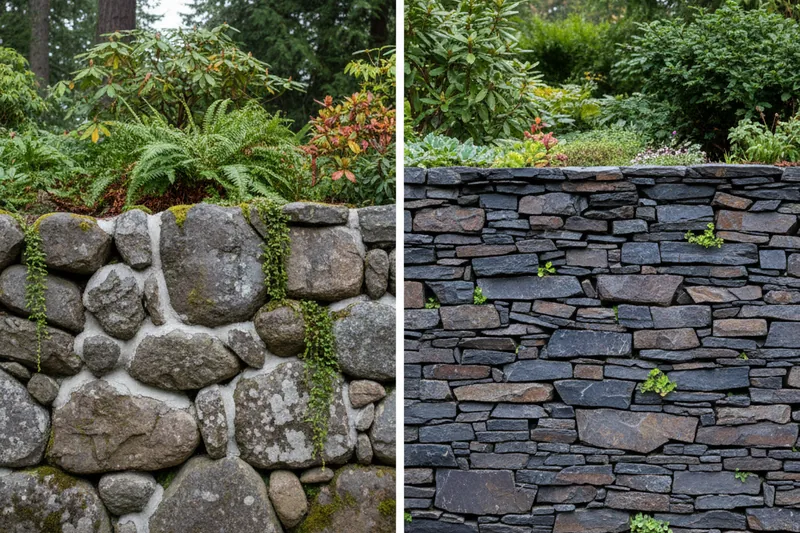
Mortared vs. Dry Stack Stone Walls: Which is Best for Your Slope?
When you are faced with a sloping yard, a retaining wall in Seattleis rarely a luxury; it is a necessity for erosion control and usable space. The most critical decision you will face—aside from the type of stone—is the construction method: mortared (wet-set) or dry stack. The earliest known use of mortared stone walls dates back to 6,500 B.C. in Pakistan, highlighting the ancient origins and enduring nature of this construction technique.
The short answer is that dry stack walls are generally superior for most residential slopes because they are flexible and self-draining. Mortared walls, used for centuries, provide a rigid, formal aesthetic but require intensive engineering and complex drainage systems to prevent failure on a slope.
Understanding the Fundamentals
Before choosing a style, you must understand how these two methods differ in their structural DNA. Each wall type provides a unique structure to your landscape—mortared walls offer a solid, architectural element with strong support, while dry-stacked walls create a more natural, flexible structure that blends into the environment.
For example, a mortared wall uses cement to bind stones together, resulting in a sturdy, formal appearance ideal for supporting heavy loads, whereas a dry-stacked wall relies on carefully placed stones without mortar, giving it a rustic look and allowing for natural drainage.
What is a Dry Stack Stone Wall?
Dry stacked walls, also known as dry stack walls, are built by carefully fitting interlocking stones together without any mortar or binding agent. The structural integrity of these dry stacked walls comes from the weight of the stones, the friction between the interlocking stones, and a slight backward lean (batter) toward the slope.
What is a Mortared Stone Wall?
Also known as a “wet laid” wall or “wet laid wall,” this method uses mortar—a workable paste made from a mixture of cement, sand, and water—to bond stones together. These walls are usually built on a concrete foundation (footing) that sits below the frost line to prevent the wall from cracking as the ground shifts.
Drainage: The Silent Killer of Retaining Walls
On a slope, water is your biggest enemy. When it rains, water flows down the hill and collects behind your wall, creating “hydrostatic pressure.”
- Dry Stack Performance: These walls are “naturally aspirated.” Because there is no mortar, water can seep through the small gaps between the stones. This prevents pressure from building up, making the wall much less likely to bulge or collapse during heavy Seattle rains.
- Mortared Performance: A mortared wall is a solid, waterproof barrier. If you do not install a rigorous drainage system—including perforated pipes (weep holes) and a thick layer of gravel backfill—the trapped water will eventually crack the mortar or push the entire wall over. For added stability and drainage, it’s important to place rubble and fill, such as earth or small stones, behind and beneath the wall. This helps direct water away from the structure and reinforces the wall’s integrity.
Comparing the Two: At a Glance
Feature
Dry Stack Stone
Mortared Stone
Primary Benefit
Excellent drainage and flexibility
Formal, “permanent” look
Footing Required
Compacted gravel trench (depth depends on wall height and stability needs)
Deep concrete slab (depth of footing is critical for supporting the wall and preventing settling)
Durability
High (can shift with the earth; stability enhanced by building in proper courses
Moderate (prone to cracking; building in courses improves strength and longevity)
Repairability
Easy (replace individual stones; course-by-course repairs possible)
Difficult (requires masonry work; repairs often involve working with entire courses)
Cost
Lower (less prep/materials)
Higher (labor and concrete costs)
When to Choose a Dry Stack Wall
Dry stack is the gold standard for Pacific Northwest rockeries and sloped landscapes for several reasons:
Granite is a popular choice for dry stack walls because of its durability, natural beauty, and the variety of colors available, making it easy to match with your landscape. Dry stack walls are also ideal for defining or enhancing a patio area, providing both structure and visual appeal to your outdoor living space.
1. Soil Movement and Frost Heave
The earth is constantly moving. Soil expands when it freezes and settles when it dries. A dry stack wall is flexible; it can move slightly with the earth without losing its structural integrity. It “breathes” with your landscape.
2. Aesthetic Versatility
If you want a natural, “always been there” look, dry stack is the answer. It allows for planting small alpines or mosses in the crevices, turning a structural necessity into a living garden feature.
3. Lower Long-Term Maintenance
If a stone shifts in a dry stack wall after ten years, you simply tuck it back in or shim it. If a mortared wall shifts, the mortar joints crack. Patching mortar is rarely a perfect match, and the cracks often signal a deeper structural issue with the concrete footing.
When to Choose a Mortared Wall
While dry stack is often more practical, mortared walls have a specific place in high-end hardscaping:
Building a mortared wall involves a careful, step-by-step process that requires planning for the finished height of the structure to ensure stability and the desired appearance. Achieving a durable and long-lasting mortared wall also demands a higher skill level, as expertise is needed for proper stone fitting, foundation work, and drainage solutions. Mortared walls are ideal when you need a strong, permanent structure that can support significant weight or when a precise, uniform look is desired.
1. Formal Architectural Designs
If your home has a very modern or highly traditional formal aesthetic, the clean lines of a mortared wall may be a better match. It provides a sense of “finished” masonry that dry stack cannot always replicate. Mortared walls also create a clean, well-defined edge, ensuring the boundary of the wall is straight and stable, which enhances both the durability and the formal appearance of the design.
2. Seating Walls
If the top of your wall doubles as a place for people to sit, mortar is beneficial. It locks the capstones in place so they don’t wiggle or shift when someone sits down or stands up. Flat stones are preferred for capstones on seating walls, as they provide a stable and comfortable surface.
3. Structural Height in Tight Spaces
In rare cases where a slope is incredibly steep and there is no room for a “batter” (the backward lean required for dry stack), a heavily engineered mortared wall on a massive concrete footing can sometimes be built vertically—though this is significantly more expensive.
Cost Factors and Timeline Expectations
Building a stone wall on a slope is labour-intensive. Here is what influences the price and the schedule:
- Excavation: Slopes require more digging to create a level “bench” for the wall to sit on.
- Site Layout: The layout is marked by driving stakes into the ground at the ends of the wall and running mason’s lines between them to ensure accurate placement.
- Material Selection: Large boulders are often cheaper and faster to install with machinery, while small, hand-cut flagstone or ledger stone requires hundreds of man-hours.
- The Footing: For mortared walls, you have to wait for the concrete footing to pour and cure before the stone work begins, adding at least 3–7 days to the timeline.
- Construction: Careful laying of each stone or capstone is essential for stability and appearance. During this process, it’s important to avoid excess mortar from oozing out, which helps maintain a clean, professional finish.
- Access: If a contractor can get a mini-excavator to the slope, the job will be faster. If everything must be moved by hand or wheelbarrow, labor costs will rise.
Common Mistakes to Avoid
Neglecting the “Batter”
A dry stack wall should never be perfectly vertical. It needs to lean back into the hill at a rate of roughly 1 inch for every 1 foot of height. Without this, gravity will eventually pull the wall forward.
Using the Wrong Backfill
You should never use “dirt” or native soil directly behind a stone wall. You must use clean, crushed gravel. This allows water to fall straight down to your drainage pipe rather than turning the soil into heavy mud that presses against the stones.
Building Too High Without a Permit
In Washington State, most walls over 4 feet in height require a permit and specific engineering. Attempting to build a 6-foot mortared wall without professional oversight is a recipe for a very expensive failure.
FAQs: What People Are Afraid to Ask
Will a dry stack wall attract pests? While the small gaps can provide a home for beneficial insects or the occasional toad, a properly backfilled wall with crushed gravel is not an attractive home for rodents. They prefer soft dirt they can tunnel through.
Can I DIY a mortared wall? Mortar work is much harder than it looks. It is messy, and if your mix is wrong or your footing is shallow, the wall will crack within two seasons. Dry stack is more “forgiving” for a DIYer, though the heavy lifting carries its own risks.
How long do these walls actually last? A well-built dry stack wall can last 50 to 100 years. A mortared wall also has a long lifespan, but its “visual” life is often shorter because of surface cracking and staining.
Is a Stone Wall Right for Your Slope?
A stone wall is a permanent solution, but it isn’t always the right fit.
This solution is NOT a good fit if:
- You are on a very tight budget (timber or interlocking concrete blocks are cheaper).
- The slope is currently sliding (you may need a geo-technical engineer and “soil nails” rather than just a decorative stone wall).
- You want a perfectly smooth, painted surface.
However, if you want a durable, beautiful, and value-adding feature for your property, a natural stone wall—specifically a dry stack one—is the most reliable choice for the terrain of the Seattle area.

Written by
Keith EneixCo-Owner, New Life Rockeries
Keith Eneix is a co-owner of New Life Rockeries alongside his brother Neil Eneix. He began helping with operations in 2007 and has been involved ever since. He writes from nearly two decades of hands-on experience with retaining walls, rockeries, and hardscaping across the greater Seattle area.
View full profile →Ready to Start Your Project?
New Life Rockeries has been building retaining walls, rockeries, and hardscaping across the greater Seattle area since 1975. Get your free estimate today.