
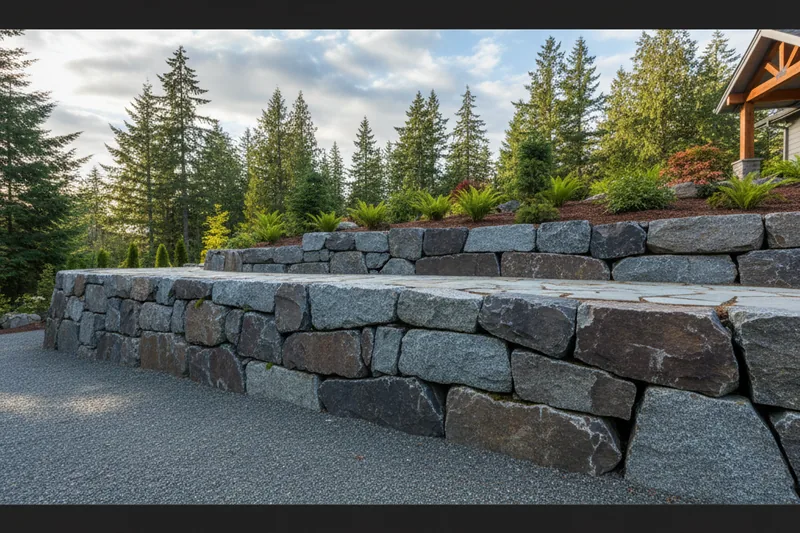
Permitting 101: Do You Need a Permit for Your Retaining Wall in WA?
In Washington State, the question of whether you need a permit for a retaining wall in Seattle is determined by one primary factor: safety. A retaining wall is not just a landscaping feature; it is a structural barrier holding back thousands of pounds of earth. If that barrier fails, it poses a risk to life, property, and the environment.
The short answer for most Washington homeowners is: If your retaining wall is over four feet tall (measured from the bottom of the footing to the top of the wall), you almost certainly need a building permit. However, even shorter walls may require permits if they support a “surcharge” load, such as a driveway, a fence, or a steep slope above them.
Navigating city regulations and Washington State building codes can feel like a bottleneck, but understanding the rules before you break ground is the only way to protect your property value and avoid costly legal orders to remove unpermitted work.
What is a Retaining Wall Permit?
In plain English, a retaining wall permit is an official approval from your local building department (such as the City of Seattle, Bellevue, or Snohomish County) to construct a structural wall.
This process ensures that your wall is designed according to the International Building Code (IBC) and local amendments. When you apply for a permit, a city official reviews your plans to ensure the wall won’t collapse, slide, or cause drainage issues for your neighbors.
The “Four-Foot Rule” and Washington State Building Codes
Most jurisdictions in Washington follow the standard set by the International Residential Code (IRC). This code states that a permit is required for retaining walls that are over four feet in height, measured from the bottom of the footing to the top of the wall.
Calculating Height Correctly
Many homeowners make the mistake of measuring only the portion of the wall they can see. In the eyes of a building inspector, the “height” includes the part of the wall buried underground for stability. If you have a three-foot wall visible above ground, but it has a eighteen-inch buried base, you have a four-foot-six-inch wall that requires a permit.
Surcharge Loads: The Exception to the Height Rule
A “surcharge” is any extra weight pressing down on the soil behind the wall. Even if your wall is only two feet tall, you will likely need a permit if:
- There is a driveway or parking area within a few feet of the wall.
- A fence is built directly on top of the wall.
- The ground above the wall slopes upward significantly.
- The wall is supporting a structure, like a shed or a house foundation.
How the Permitting Process Works
The process varies slightly between cities like Lynnwood, Shoreline, or Everett, but the general workflow remains the same.
1. Site Plan and Design
You or your retaining wall contractors must create a site plan showing where the wall will be located in relation to property lines, existing structures, and utilities. For walls requiring a permit, you will often need “engineered drawings” stamped by a licensed structural engineer.
2. Application Submission
You submit your plans, engineering calculations, and the permit fee to the local building department. Today, most Washington cities handle this through online portals.
3. Plan Review
A city plan examiner looks at your submittal. They check for soil stability, drainage plans, and setbacks from property lines. If they find issues, they will issue “corrections,” which must be addressed before the permit is granted.
4. Inspections
Once the permit is issued, you can begin construction. However, you cannot finish the wall all at once. An inspector must visit the site at specific intervals:
- Footing Inspection: To check the trench and base material before stones are laid.
- Drainage/Backfill Inspection: To ensure the proper perforated pipe and gravel are used.
- Final Inspection: To verify the finished height and site restoration.
Costs and Pricing Factors for Permitting
Permitting adds to the upfront cost of a hardscape project, but it is a fraction of the cost of rebuilding a failed wall.
- Permit Fees: Usually calculated based on the total valuation of the project. For a standard residential wall, expect to pay between $500 and $1,500 in city fees.
- Engineering Fees: If a structural engineer is required, their fees typically range from $1,500 to $3,500 depending on the complexity of the slope and soil.
- Surveying: If your wall is close to a property line, the city may require a professional survey to ensure you aren’t building on your neighbor’s land.
Timeline Expectations
You should never expect to get a retaining wall permit in a single afternoon.
- Preparation (1–2 weeks): Gathering measurements and hiring an engineer.
- City Review (4–12 weeks): This is the biggest variable. Smaller cities may move faster, while major hubs like Seattle often have backlogs.
- Construction (1–3 weeks): The actual build time.
Common Mistakes and Misconceptions
“I’m just replacing an old wall, so I don’t need a permit.”
This is a common misconception. If you are replacing a failed wall that is over four feet tall, it is considered new construction. Because the original wall failed, the city wants to ensure the new design addresses the underlying issues, such as poor drainage or soil movement.
Building in the “Setback”
Most properties have “setbacks”—areas near the property line where structures are restricted. If you build a large wall in a setback without a permit, you may be forced to tear it down, even if the wall is perfectly safe.
Splitting One Tall Wall into Two Short Ones
Some homeowners try to avoid permits by building two three-foot walls in a “terraced” fashion. However, if the walls are too close together, the top wall puts pressure on the bottom wall. Most cities treat this as a single “tiered” wall and require a permit if the total height exceeds four feet.
Comparisons: DIY vs. Professional Permitting
Feature DIY Approach Professional Contractor Approach Risk of Error High (missing local code amendments) Low (familiar with local inspectors) Engineering Homeowner must source independently Usually handled as a “turnkey” service City Interaction Can be confusing and time-consuming Contractor handles all submittals and corrections Legal Protection Homeowner is liable for all mistakes Licensed contractor carries the liabilityFAQs: What People Are Afraid to Ask
What happens if I get caught building without a permit?
The city will issue a “Stop Work Order.” You will be fined (often double the original permit fee) and required to hire an engineer to prove the wall is safe. If it cannot be proven safe, you will have to demolish it at your own expense.
Do I need a permit for a rockery?
Yes. Even though a rockery seattle uses natural boulders, it is still a retaining structure. Washington codes treat rockeries and block walls under the same height thresholds.
Will a permit increase my property taxes?
While a new retaining wall adds value to your home, it rarely triggers a significant jump in property taxes. It is viewed more as a site improvement or repair than an increase in square footage.
When a Permit is NOT a Good Fit
If you are looking for a temporary or “quick fix” for a minor garden border, the permitting process may be overkill. A permit is generally not needed if:
- The wall is under four feet tall and has no surcharge.
- The wall is purely decorative (e.g., a small six-inch border for a flower bed).
- You are using “soft armoring” techniques like planting vegetationto hold a very minor slope.
However, if your goal is a permanent, structural solution for a Washington slope, following the legal permitting path is the only way to ensure your investment is protected.
Ready to Start Your Project?
New Life Rockeries has been building retaining walls, rockeries, and hardscaping across the greater Seattle area since 1975. Get your free estimate today.
Get Your Free Estimate →
Written by
Keith EneixCo-Owner, New Life Rockeries
Keith Eneix is a co-owner of New Life Rockeries alongside his brother Neil Eneix. He began helping with operations in 2007 and has been involved ever since. He writes from nearly two decades of hands-on experience with retaining walls, rockeries, and hardscaping across the greater Seattle area.
View full profile →Ready to Start Your Project?
New Life Rockeries has been building retaining walls, rockeries, and hardscaping across the greater Seattle area since 1975. Get your free estimate today.